
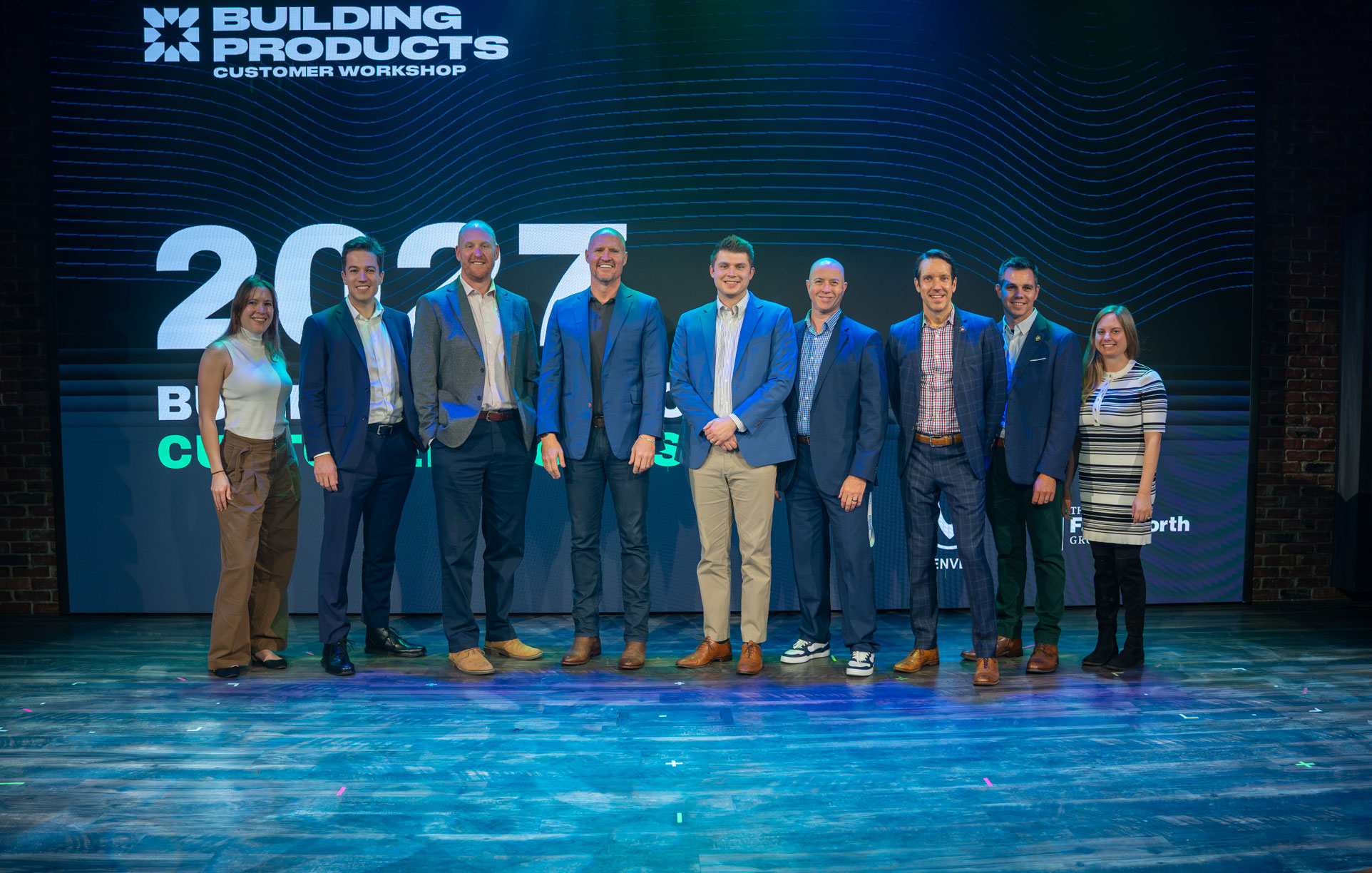
At the beginning of November 2026, our teams at The Farnsworth Group and Venveo welcomed about 80 marketing and insights leaders from across the building products industry to Nashville. Over two days, The Farnsworth Group's senior advisors shared insights from our latest research on four building products audiences: generalist builders, specialty trades, architects and designers, and DIYers.
Venveo helped bring the data to life with real-world examples, with the goal of facilitating discussion and debate about what the building products industry can look forward to in 2027.
Who Else Was There?
Professionals from across the industry kept the conversation grounded through 5 live customer panels at the workshop:
- Builders and remodelers Jeff Grantham (Grantham Building and Remodeling), Keegan Fioravanti (Lotus Building Group), Cody Byrd (Alair Homes), and Jeremiah Pierce (Leverick Homes) shared their views on how manufacturer and suppliers can support Pros better on the jobsite and in their workflows.
- Architects and designers Robert Ledet (Elevated Environments), Steve Baczek (Steven Baczek Architect), and Haley Eakin (In House Studio) joined Benjamin Glunz (Anguleris) to talk through what they consider and how they specify products.
- Specialty contractors Paul Ollar (Ultimate Windows & Doors), Ronnie Smith (Next Level Solutions), Arian Torabi (Modern Mechanical Contractors) and Paul Olsen (So Good Home Services) described how they choose products and suppliers.
- Pro influencers Mark Wille (The Build Show), Stephanie Dailey, and Cole Simpson (Soda City) shared how pros learn about products online.
- And channel leaders Eric M. Bernstein (CCA Global Partners), Erin Plummer (Hancock Lumber), and Craig Smith (The Cool Hardware Company) joined Webb Analytics founder Craig Webb to explore how consolidation is reshaping the channel.
Key Themes That Emerged
Across two days of presentations, industry leaders explored emerging trends in building products purchasing behavior, brand loyalty, and the evolving customer journey. Here are a few findings and actionable takeaways from the event that building products manufacturers and retailers looking to strengthen their competitive position in 2027 and beyond should be mindful of:
The Economy: 2026 Was Tough, but Growth Expected to Return in 2027
The Home Improvement Research Institute (HIRI)'s Executive Director, Dave King, opened with a candid look at the year. Supply chain and labor disruptions, tariffs, inflation, and global uncertainty have weighed on building product demand in 2026, and building material prices are up 63% since 2019. Still, Dave left the room optimistic based on HIRI's market forecast data. Homeowner and pro markets are both forecasted to return to real growth in 2027 (not just growth from price inflation), and real spending could even regain its 2021 peak by 2029. Record home equity, aging homes, and years of deferred repairs all point to remodeling work that’s coming and will drive building products demand.
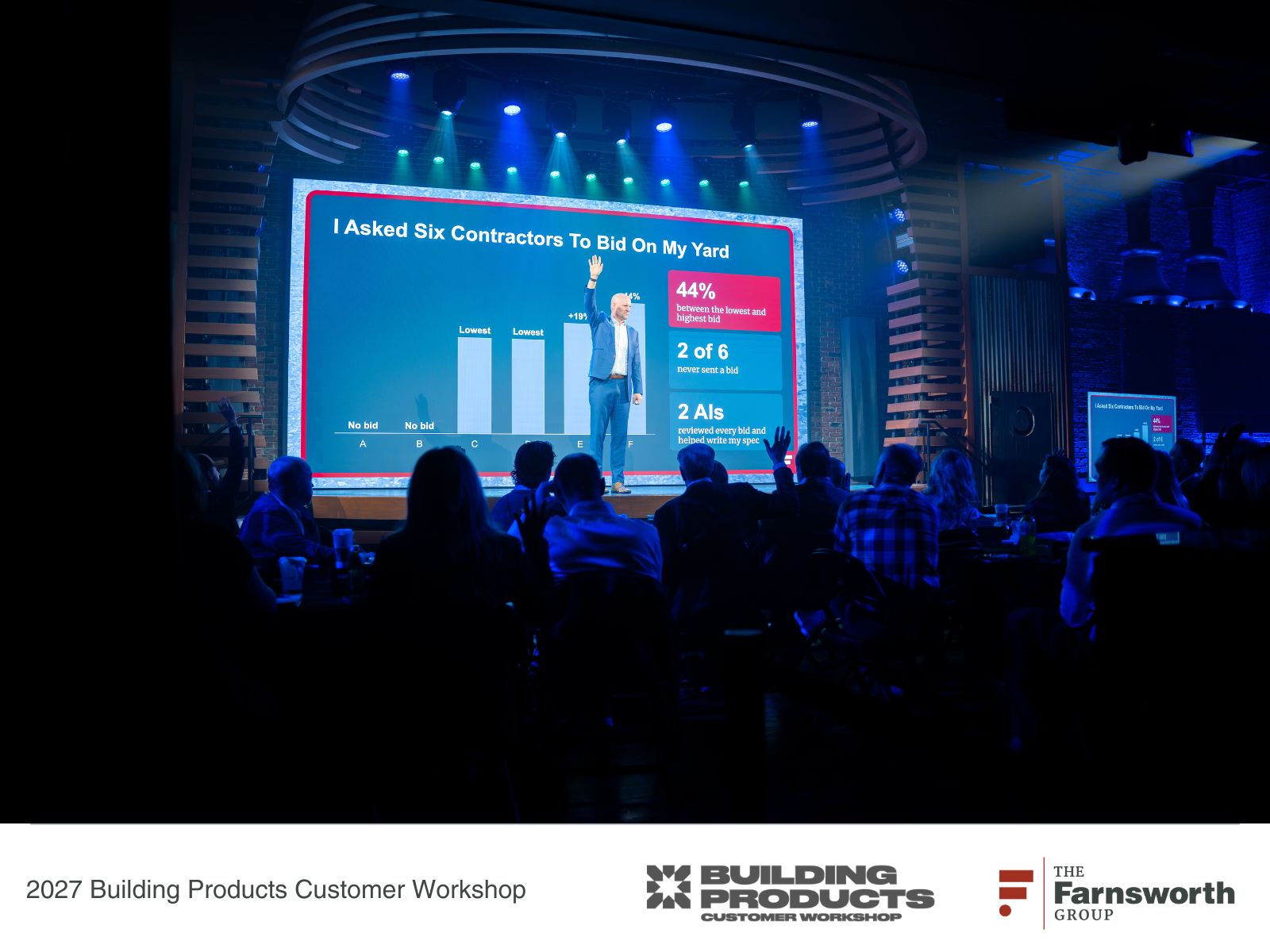
For Builders, Remodelers & GCs, Quality Wins the Product Trial, and the Channel Wins their Loyalty
The Farnsworth Group's President, Grant Farnsworth, and Venveo's CEO, Beth Popnikolov, explored our research findings from among builders, remodelers, and general contractors.
- Product quality outranked price, availability, and warranty, with 84% naming it the top factor when choosing a brand.
- Nearly half tried a new product or brand last year, and 90% of them were satisfied.
- Quality and peer recommendations get builders to try a product, but where they buy it keeps them coming back.
- Among home builders, the share who value supplier loyalty programs doubles from the first purchase (12%) to the repeat purchase (25%).
- And when something goes wrong, builders pick up the phone, with 78% contacting a manufacturer last year.
This means manufacturers need to support builders from product quality to channel accessibility and all the way through post-installation service.
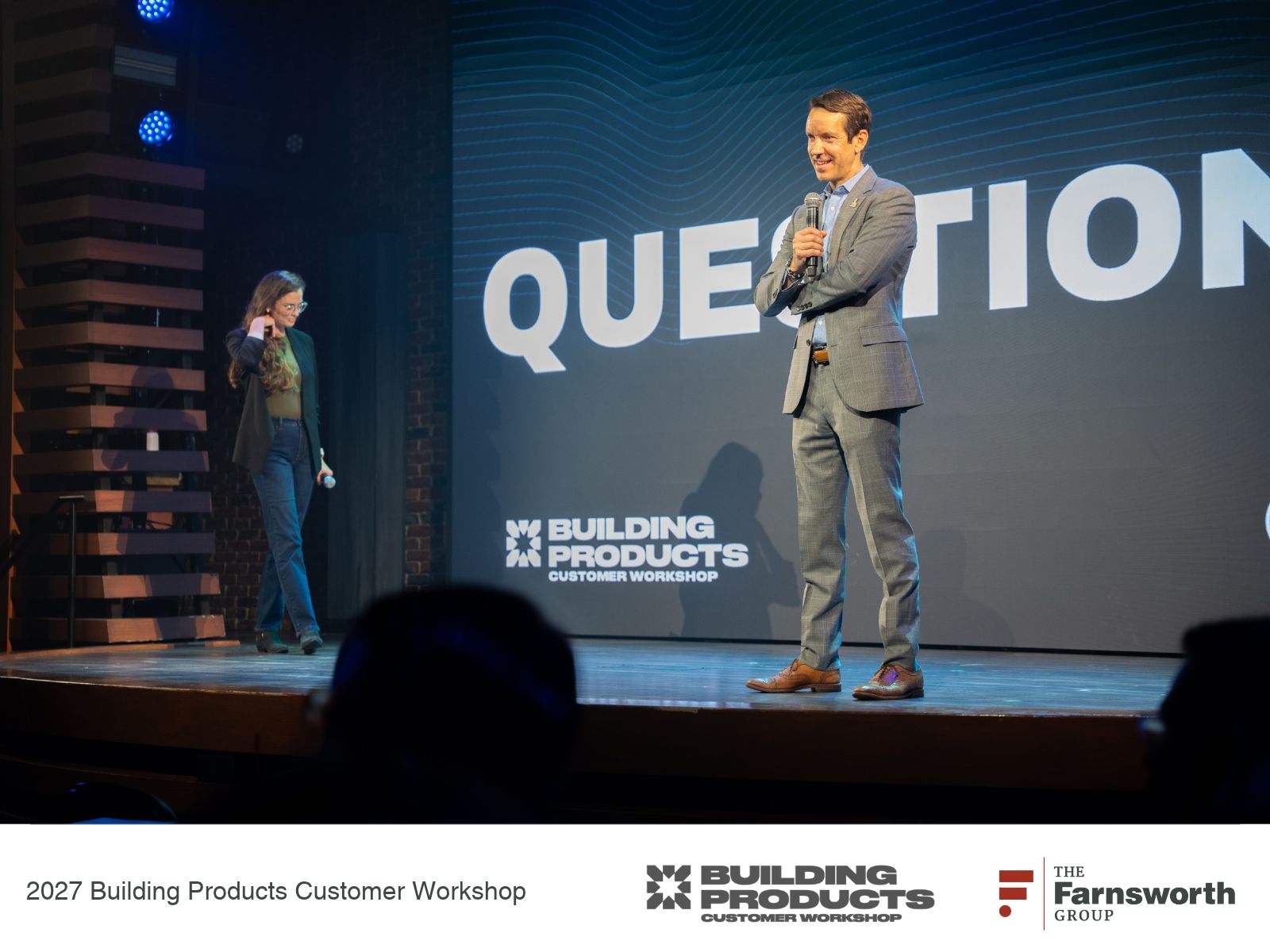
Architects & Designers Want to Try New Brands, and Manufacturers Aren’t Delivering
The Farnsworth Group's Senior Research Advisor, Karen Barnes, and Venveo's Chairman, Zach Williams, discussed findings from our research on architects and designers, whose short-term outlook is mixed.
- Compared to last year's findings, more expect product availability to improve (+19 points), but fewer expect higher margins (-10 points).
- Architects are remarkably open to new brands. 85% tried one last year and 97% were satisfied, which is a strong opportunity for disruptor brands and products.
Yet manufacturers under-deliver on several top priorities.
- Samples rank second in importance but tie for seventh in performance, and local rep contact ranks last of 14 services.
- Winning the spec isn’t the end of the story. 80% of architects see their specified products substituted with another brand at least sometimes, most often at the owner’s request.
- Architects have also embraced AI faster than any other group. 90% used it in design or spec work, compared with 48% of other Pros.
The 2027 version of the Building Products Customer Guide will become available in Q1 of 2027. You can also access the 2026 survey results in the meantime.

Residential and Commercial Tradespeople Take Different Paths to Purchase
The Farnsworth Group's Senior Research Advisor, Taylor Pence, and Venveo's CEO, Beth PopNikolov highlighted a few splits between residential and commercial specialists that appeared in our research results.
- Residential specialists rely on the aisle, salespeople, and easy installs, while commercial specialists turn to supplier sites, manufacturers, and AI.
- Both do their homework, as 75% of residential and 86% of commercial trades research online for 30 minutes or more before they buy.
Even as AI use grows, relationships still decide where trades buy.
- Residential trades lean on people they know. Nearly half discover new brands through friends and colleagues, and 38% through a store salesperson.
- Commercial trades weigh manufacturer recommendations as heavily as peer recommendations (52% each).
- And when it comes to staying with a brand, both groups increasingly point to their supplier relationships. Among commercial trades, supplier loyalty programs rise from 5% to 19% in importance between the first purchase and the repeat, and buying through a preferred supplier rises from 11% to 23%.
- Few tradespeople have used a brand’s own AI assistant (1% of residential and 3% of commercial). The trusted dealer at the counter still carries more weight than any chatbot.
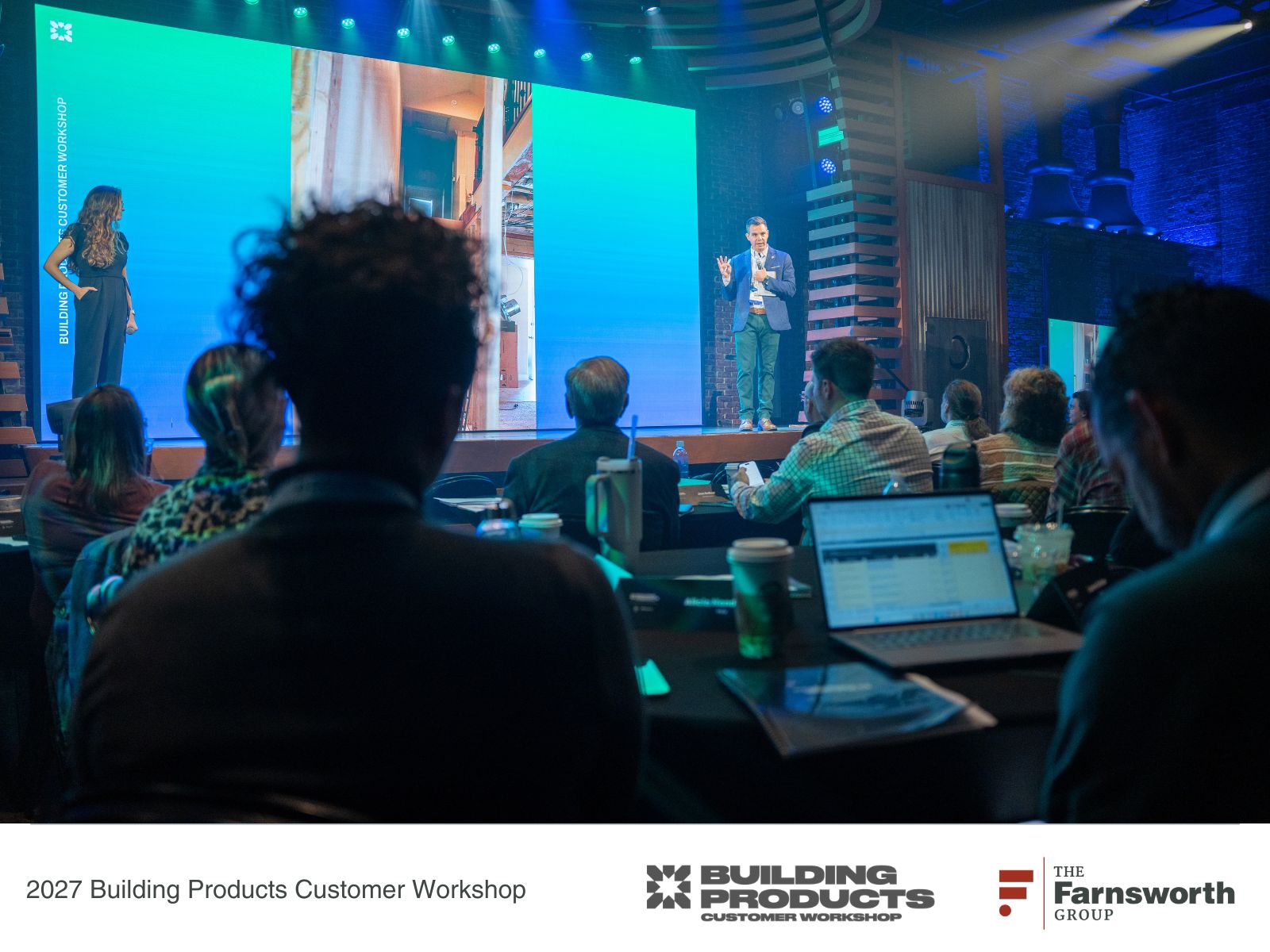
DIYers: More Research, More Switching
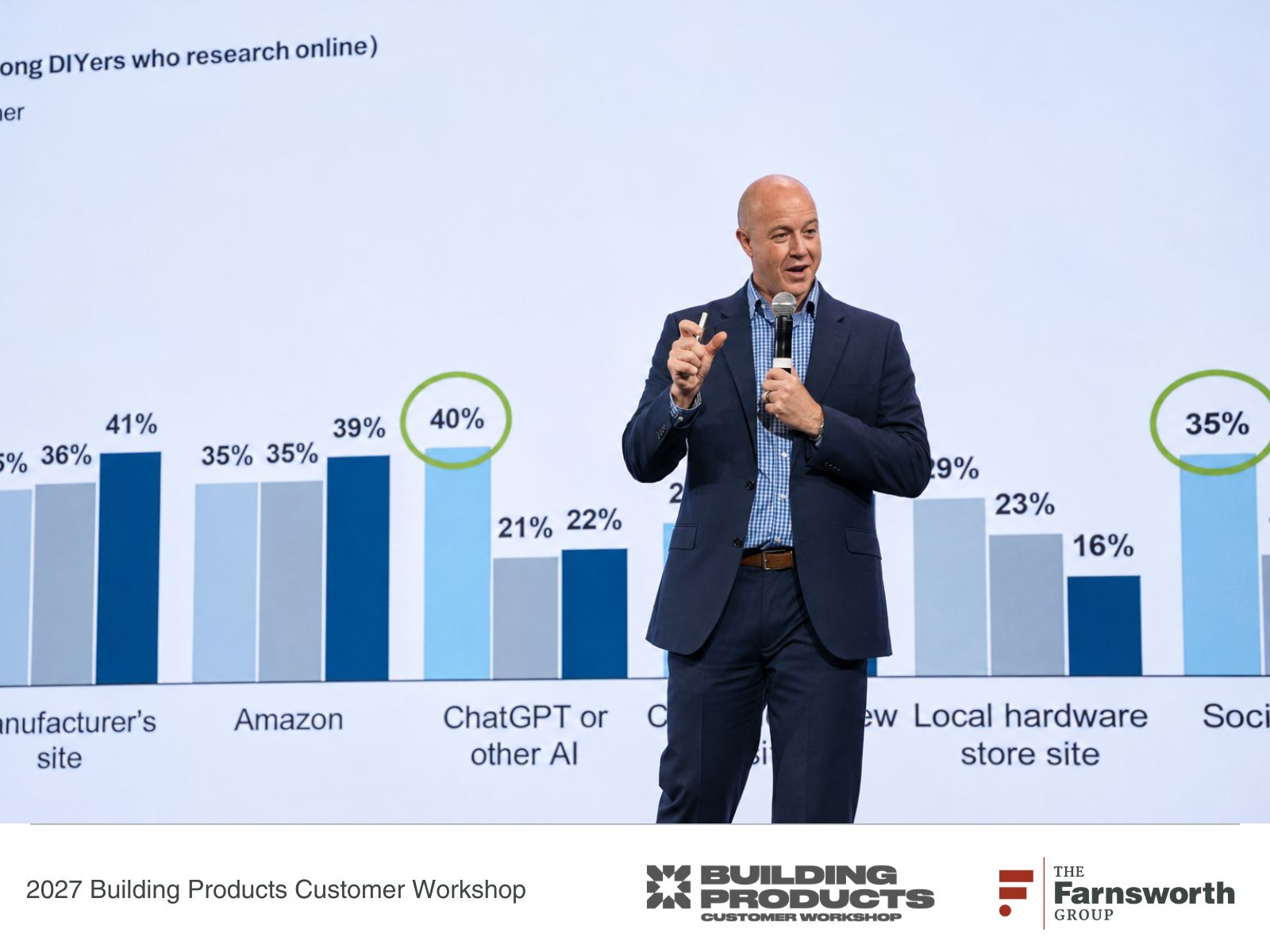
On day two of the event, The Farnsworth Group's Senior Research Advisor, Eric Voyer, and Venveo's Chief Strategist Deanna Murphy explored our research findings on DIYers.
- 86% research online for at least 30 minutes before buying, and heavy DIYers go much further.
- 72% of them spend an hour or more online, and 59% spend just as long in the store.
- Heavy DIYers are also expanding beyond YouTube into Facebook (43%), TikTok (28%), and Reddit (24%) to learn about products and brands.
- Video works best, with 79% preferring how-to videos to learn installation. DIYers are shopping around more, too. 57% tried a new brand last year, up from 46%, and 43% tried a new supplier, up from 27%.
Relationships shape their brand and product choices.
- The strongest influences on trying a new brand are online reviews (53%) and recommendations from friends and family (52%), well ahead of manufacturer recommendations (30%).
- People and relationships matter after the sale, too. Heavy DIYers, not beginners, are the ones contacting manufacturers (67% vs. 42% of light DIYers), and quick repair or replacement and phone support top the list of what DIYers want.
- And while 40% of DIYers use AI on their projects, only 6% have used a brand’s own AI assistant. As many speakers underscored, embracing AI doesn’t mean replacing customer service fundamentals.
The Big Picture About Building Products Customer Behaviors in 2026 and into 2027
I left Nashville with three takeaways that cut across every audience: Your customers are open to change, AI is reshaping product research, and product quality and people still matter. As a result, there are key strategies your teams should be focusing on improving to compete well in 2027:
Support the whole journey.
Where you meet customers depends on your industry and product, but what struck me was how consistent the expectation is. Every audience we studied expects help before, during, and after the sale. Builders, GCs, and tradespeople want someone to pick up the phone and fix problems fast, architects want samples in hand, and DIYers want a quick repair or replacement when something goes wrong. Meeting those expectations starts with understanding each customer’s unique needs.
Get your specs right, because AI is reading them.
AI is changing how Pros and DIYers plan projects and research products, and this year’s data shows it’s happening rapidly. Roughly two-thirds of AI users trust what it tells them a lot or completely, and very few use a brand’s own assistant. AI agents pull specs from manufacturer websites into the answers customers see elsewhere. To me, that makes your website's AI visibility more important than ever, even when fewer people visit it directly. The burden is on manufacturers to keep specs current, accurate, and consistent everywhere.
Relationships still win.
If I had to choose one finding to carry into 2027, it’s this one. Even with AI everywhere, relationships remain the strongest driver of loyalty. Builders trust another contractor’s recommendation (62%) more than a manufacturer’s (47%). 82% of architects say their manufacturer relationships matter to project success, and they say owner and contractor relationships protect a spec better than tighter spec language. I especially appreciated Venveo’s example from real estate: Twenty years after Zillow put listings online, 88% of home buyers and 91% of sellers still use an agent. The information moved, but the demand for expertise and a high-touch, human experience remains.
Thank you to every attendee who brought sharp questions and valuable perspectives, to our speakers, panelists, and our partners at Venveo. If you’d like to dig deeper into any of our research findings, our team would love to connect.
Turning Insights Into Action
While events like this workshop provide a valuable pulse on the industry and a high-level view of the behaviors and attitudes of core customer segments, the best opportunities become clear when brands dig deeper into their own audiences.
Every customer group has unique needs, decision drivers, and expectations and those nuances are what determine whether your marketing, product strategy, and channel support efforts are on point. That’s where custom usage & attitude research should be used. By uncovering the motivations, behaviors, and perceptions of your specific target segments, you will be able to:
- Identify which audiences offer the greatest growth potential
- Pinpoint the factors that drive purchase decisions in your categories
- Tailor messaging, content, and channel strategies that resonate with the right buyers at the right time
- Empower your sales reps and dealer networks with insights that strengthen relationships and close more business
At The Farnsworth Group, we specialize in building product and home improvement research that connects these dots. If you’re ready to move from broad industry insights to actionable strategies tailored to your customers, we're here to help.

Frequently Asked Questions
When will the 2027 Building Products Customer Guide be available for download?
The Farnsworth Group's and Venveo's 2027 Building Products Customer Guide will become available to non-attendees beginning in February 2027. At that time, you can request access to the guide and review its findings with a member of The Farnsworth Group team.
Attendees of the 2027 Building Products Customer Workshop have already received physical and digital copies of the guide. If you attended and need another digital copy, please contact our team.
In the meantime, you can still request the 2026 Building Products Customer Guide to explore insights into building products customers and market trends.
When and where will the 2028 Building Products Customer Workshop take place?
The Farnsworth Group's 2028 Building Products Customer Workshop is expected to take place in the fall of 2027, likely in October or November. The exact dates and location are still being finalized.
The Building Products Customer Workshop brings together industry professionals to explore customer research, emerging market trends, and insights relevant to building products manufacturers and retailers.
Additional event details, including the confirmed dates and location, will be announced once available.
Can I access the presentations and materials from the 2027 Building Products Customer Workshop?
Presentation materials from the 2027 Building Products Customer Workshop are available exclusively to event attendees. Attendees have already received the workshop presentations by email.
If you attended the workshop but cannot locate your materials, please contact The Farnsworth Group, and our team will help you.
Presentation materials are not available to non-attendees. However, we encourage you to join us at the 2028 Building Products Customer Workshop to explore the latest research findings and industry insights with building products industry experts and customer panelists.

Contributors

Katy Wells
Katy is a market research professional with 11 years of experience in quantitative and qualitative methodologies. Her expertise spans from questionnaire design and segmentation to moderating focus groups and managing online communities. She is passionate about uncovering the “aha” moments that help clients improve their businesses and design more empathetic customer experiences. She enjoys leveraging both numbers and conversations to help clients understand what their customers truly need. Based in Denver, she lives with her husband and two sons. She loves spending time with her family, getting outdoors, and curling up with a good book.

Grant Farnsworth
Grant has worked on every area of market research at some point – coding paper surveys, running tabs, programming surveys online, getting sample, managing fielding, generating reports and preparing analysis and presentations. Grant has been working with The Farnsworth Group since he was a teenager, learning the craft of custom market research and how to uphold the highest of standards in research design and data collection.
For the past 20 years, Grant has been involved with various associations, trade shows, committees, publishers, manufacturers, retailers, and suppliers in the home improvement, lawn & ranch, and building products spaces. For Grant, one of the most satisfying feelings is to know they helped a client to succeed when he sees the results of The Farnsworth Group work on store shelves, on new homes, and in the homes of friends and family. Based in Denver, Grant is a music buff who believes that life should be fun. In all his pursuits, Grant’s sincerest appreciation goes out to his wife – the most kind and patient person on earth.

Karen Barnes
Through her expertise in brand consulting, market research design, and advanced analytics, Karen has been helping answer critical business questions for the past 15 years. She has had the privilege of working with many of the top global insights organizations and applying best practices across a myriad of clients in CPG, technology, finance, healthcare, and of course home improvement, including developers, building products manufacturers, and retailers.
An Iowa native, Karen was upgrading from riding mowers to full combines at the annual John Deere employee fair by age 7. Now in Denver, she fills her off hours hiking the Rocky Mountains, uncovering the best local food & drink spots, and traveling as much of the world as humanly possible with her fiancé, Adam.

Eric Voyer
Eric brings nearly 30 years of experience in market research, business development, and strategic consulting within the home improvement, building products, and outdoor industries. He spent decades in syndicated research for consumer durables, where he helped leading brands turn complex data into actionable insights that drive growth. Eric's expertise spans both quantitative and qualitative methodologies. At The Farnsworth Group, Eric focuses on client engagement, project design, and strategic storytelling to ensure insights lead to clear, confident decisions.
Originally from Orlando and now based in Louisville, KY, Eric studied Business at Transylvania University, where he also competed as a collegiate goalkeeper. Outside of work, Eric still enjoys playing soccer, loves to Ski and Scuba and has a new passion for playing ice hockey.

Taylor Pence
Taylor has been serving clients and managing quantitative market research studies with The Farnsworth Group since 2015. Taylor also supports internal team development and training efforts to ensure the research team at The Farnsworth Group is current on best practices and equipped to deliver on high standards.
Taylor’s interest in the home improvement space began when he was about 10 years old upon discovery of ‘This Old House’ and Norm Abram’s ‘ New Yankee Workshop.’ Fast-forward a couple of decades and he still enjoys these sources of inspiration while tackling the perils of DIY in his own workshop. Taylor is proud husband to Lauren, and father to three awesome kids. Whenever possible, Taylor shares his hobbies with his kids, including playing music, tennis, golf, going fishing or putting his hands to a new project in the shop.

Dave King
Dave King serves as The Farnsworth Group's VP of Insights and leads the Home Improvement Research Institute (HIRI) as Executive Director, a role he assumed in 2022 after belonging to HIRI as a member and subsequently serving on HIRI’s Board. He brings more than 25 years of experience in research, strategy, and advanced analytics, with a dedicated focus on the home improvement market since 2013. HIRI, founded in 1981 as a cooperative of six manufacturers and retailers, has grown into the leading nonprofit research organization serving many of the industry’s largest brands. Members receive ~one million dollars of proprietary research annually, with roughly 50 deliverables that track contractor and homeowner behavior, forecast category dynamics, and translate insights into practical guidance for product, pricing, and go to market decisions.