
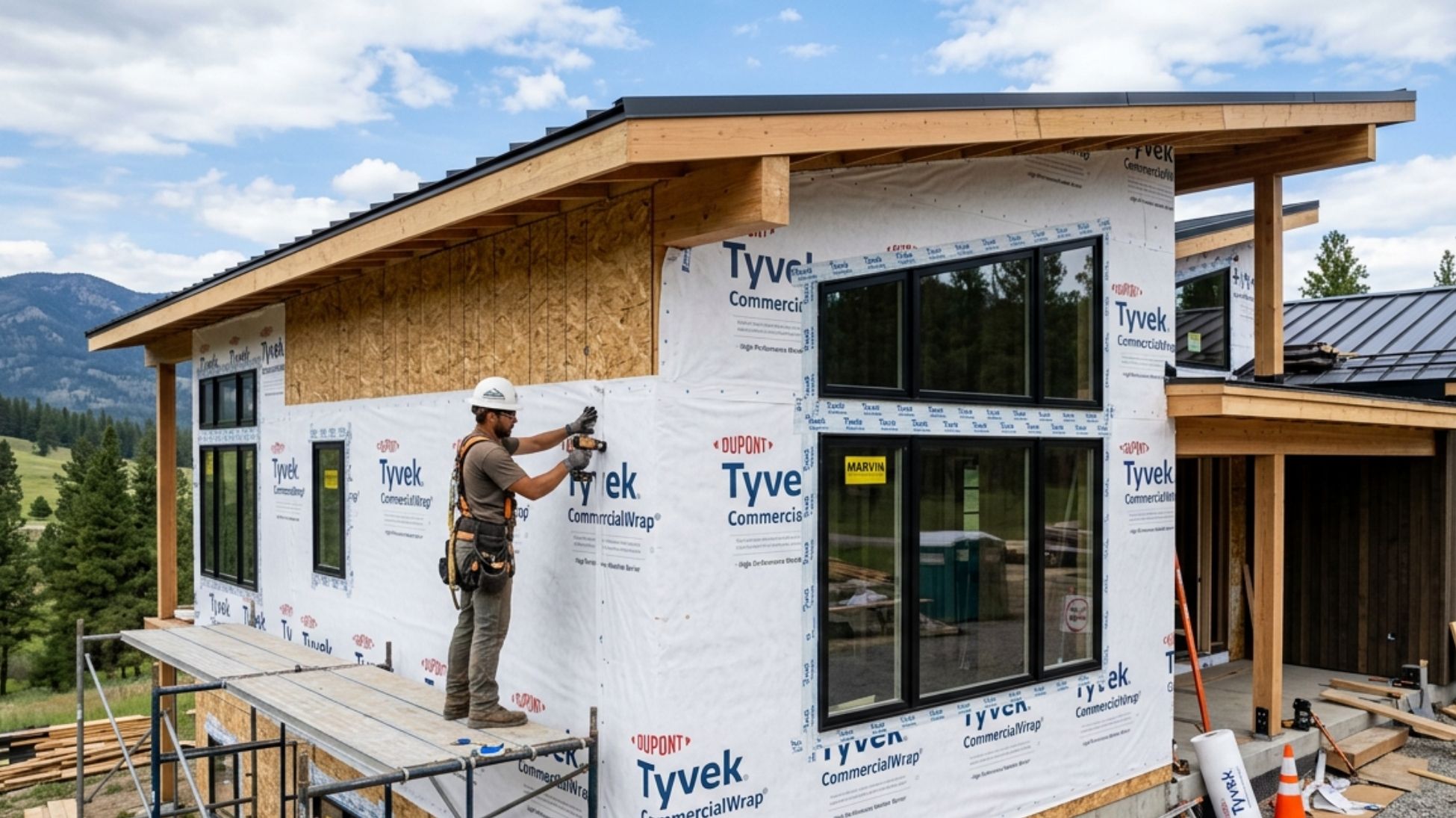
For years, “premium” in housing often meant upgraded finishes – granite countertops, luxury flooring, or designer fixtures. But today, the definition of premium is evolving. Homebuyers, builders, insurers, and regulators are increasingly focused on something less visible but far more important: how well a home performs – something homeowners themselves reinforce by prioritizing quality and durability when selecting home improvement products.
From improved insulation and high-performance windows to better moisture management and air sealing, the housing industry is placing greater emphasis on homes that deliver durability, efficiency, and long-term resilience. What was once considered a niche segment – high-performance construction – is steadily becoming an expectation in many markets.
The Shift in What “Premium” Means: What Defines a High-Performance Home?
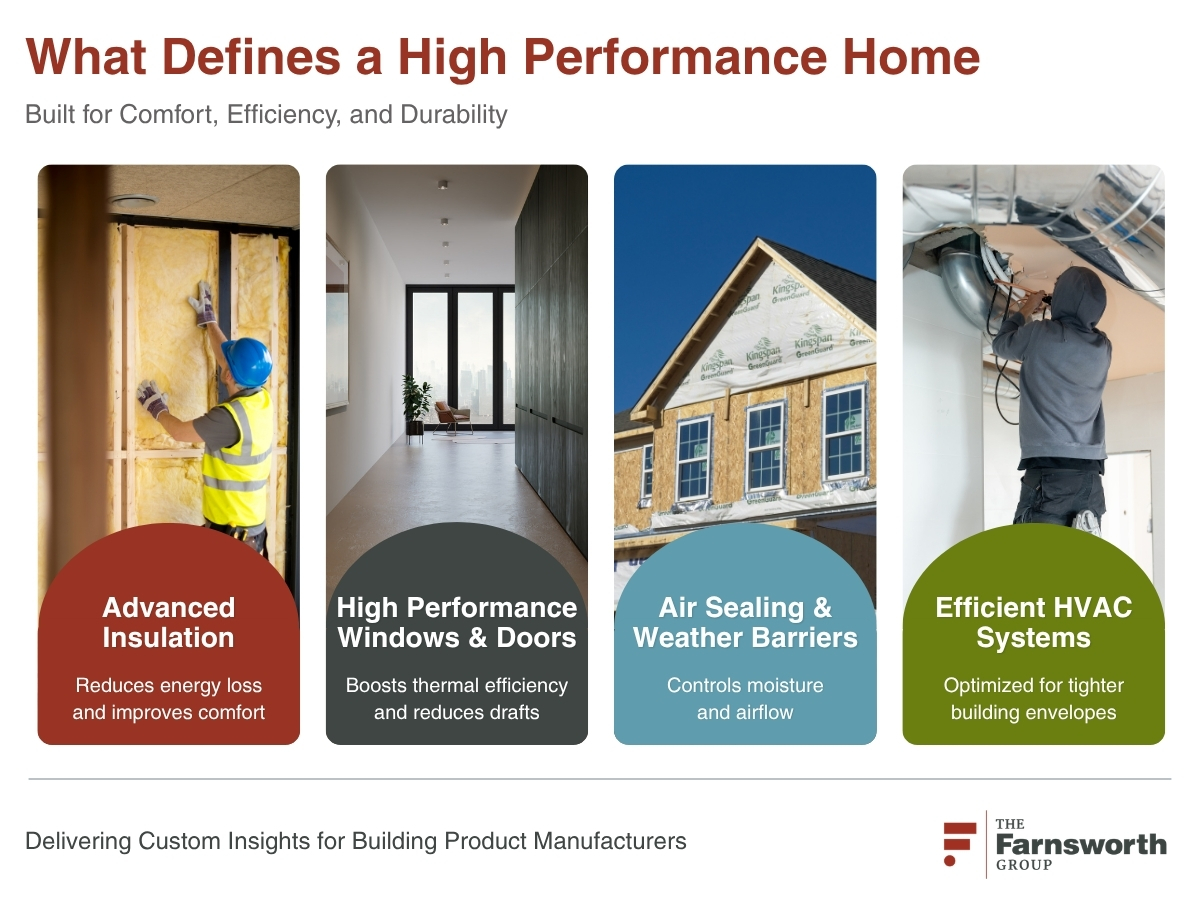
A high-performance home is designed to deliver greater comfort, efficiency, and durability through integrated building systems. Rather than relying on a single product or upgrade, these homes focus on how multiple components work together to create a stronger building envelope and healthier indoor environment.
Key elements often include:
- Advanced insulation systems that reduce energy loss
- High-performance windows and doors that improve thermal performance
- Weather barriers and air sealing that control moisture and airflow
- Efficient HVAC systems designed for tighter building envelopes
The goal is not just better efficiency – it’s creating homes that perform consistently over time while reducing maintenance, energy costs, and environmental impact.
Growing Pressure from Insurance and Risk Management
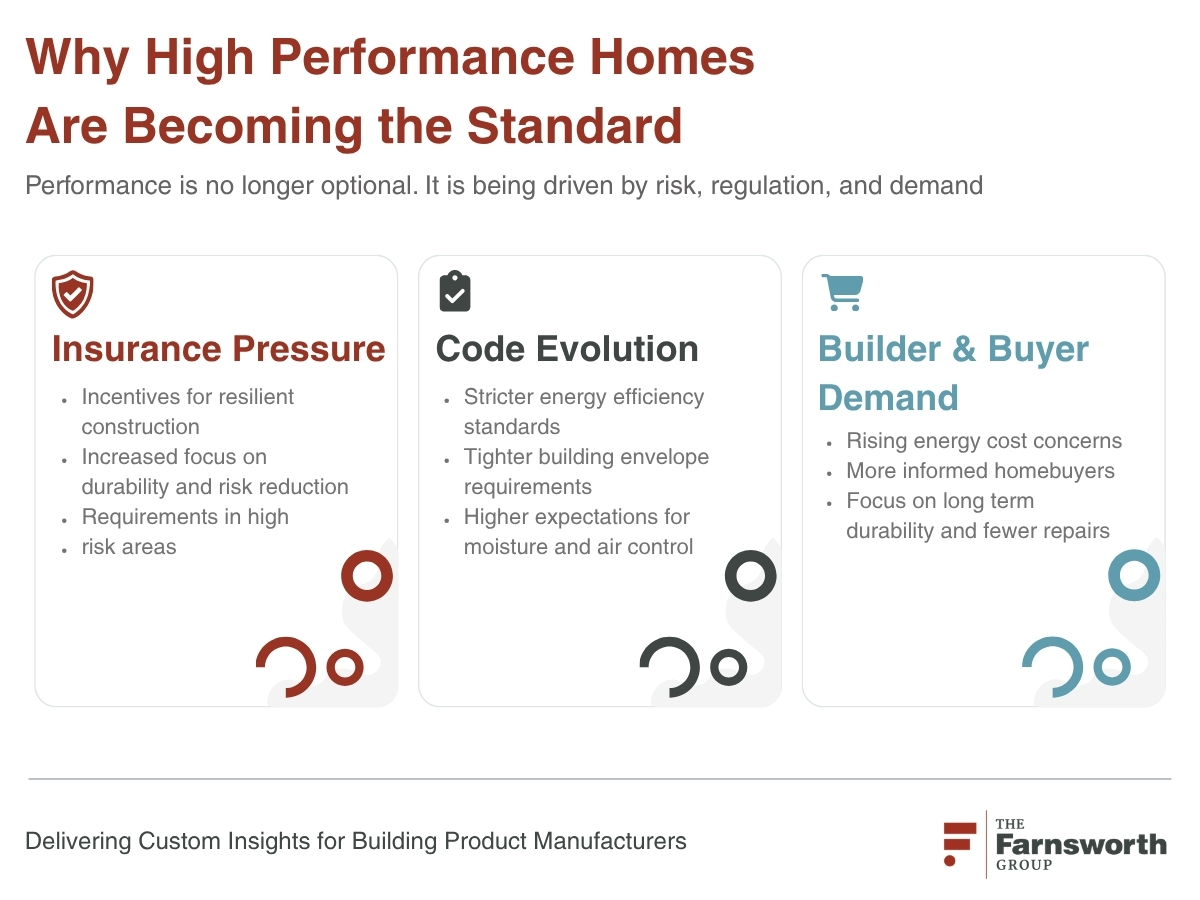
Another force accelerating the shift toward performance is coming from an unexpected place: insurance providers.
As severe weather events, wildfires, and climate-related risks continue to affect housing markets, insurers are paying closer attention to how homes are built. In some regions, insurers are already:
- Offering premium incentives for resilient building practices
- Requiring certain materials or construction approaches in higher-risk areas
- Increasing scrutiny around durability, fire resistance, and moisture protection
Homes designed with stronger building envelopes, improved ventilation, and better moisture management are often viewed as lower risk, making performance-oriented construction increasingly attractive from an insurance perspective.
Local Codes Are Raising the Bar
Building codes are also pushing the industry toward higher performance standards. Across many states and municipalities, newer codes are placing greater emphasis on tighter building envelopes, higher insulation requirements, improved energy efficiency standards, and better moisture and air management. While these regulations are primarily intended to reduce energy consumption and improve building safety, they also reinforce the broader shift toward performance-focused construction practices. In many markets, builders are going beyond minimum code requirements to ensure homes remain competitive as standards continue to evolve and buyer expectations increase.
Why Builders Are Prioritizing Performance
Beyond insurance and regulatory pressures, several broader market forces are contributing to the shift toward higher-performing homes. Energy cost uncertainty continues to push homeowners to look for solutions that deliver long-term efficiency and comfort, making features that reduce energy consumption increasingly attractive. At the same time, today’s homebuyers are more informed than ever, with concepts like energy efficiency, indoor air quality, and building durability becoming part of the homebuying conversation rather than niche considerations. Performance-driven construction also addresses long-term durability concerns, as homes designed with stronger building envelopes and better moisture and air management tend to experience fewer issues over time. By reducing the risk of problems related to air leakage, moisture intrusion, or inefficient systems, performance-focused homes can help homeowners avoid costly repairs while delivering greater comfort and reliability.
What This Means for Building Product Manufacturers
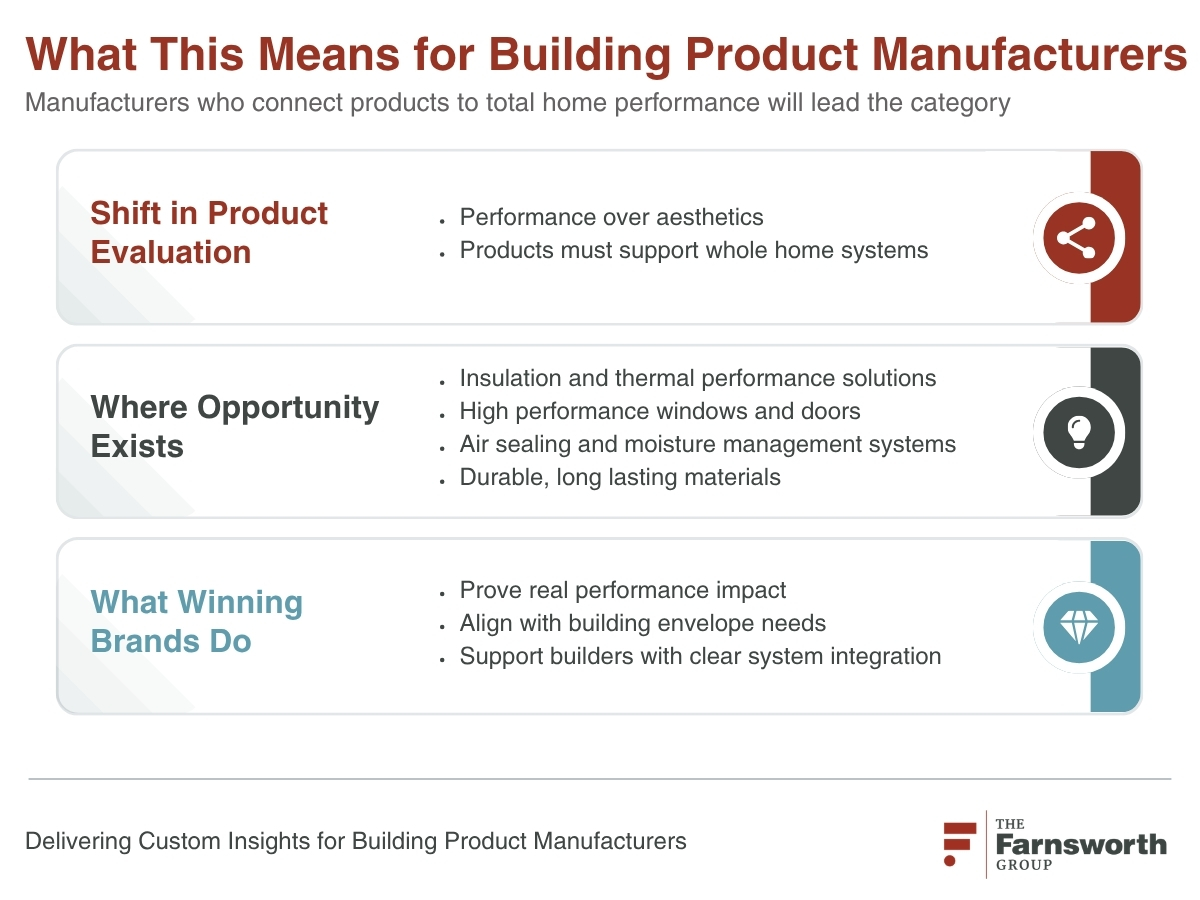
For building product manufacturers, the growing focus on performance is reshaping how products are evaluated and specified. Builders are increasingly looking beyond aesthetics and focusing on products that contribute to overall system performance, particularly within the building envelope. This includes insulation systems designed to improve thermal resistance, high-performance windows and doors that enhance energy efficiency, advanced weather barriers and air sealing products that help control airflow and moisture, and materials engineered to better manage durability and long-term structural integrity. Manufacturers that can clearly demonstrate how their products contribute to whole-home performance – rather than serving as isolated components – will be better positioned as builders continue to prioritize efficiency, resilience, and long-term value. As insurance pressures increase, codes evolve, and homeowners become more focused on long-term operating costs, homes that deliver greater durability, comfort, and efficiency will continue to gain momentum. For builders and manufacturers alike, the conversation is shifting from whether performance matters to how homes can be designed to perform better from the start.


Written By Taylor Pence
Senior Advisor
Taylor has been serving clients and managing quantitative market research studies with The Farnsworth Group since 2015. Taylor also supports internal team development and training efforts to ensure the research team at The Farnsworth Group is current on best practices and equipped to deliver on high standards.
Taylor’s interest in the home improvement space began when he was about 10 years old upon discovery of ‘This Old House’ and Norm Abram’s ‘ New Yankee Workshop.’ Fast-forward a couple of decades and he still enjoys these sources of inspiration while tackling the perils of DIY in his own workshop. Taylor is proud husband to Lauren, and father to three awesome kids. Whenever possible, Taylor shares his hobbies with his kids, including playing music, tennis, golf, going fishing or putting his hands to a new project in the shop.