

Product line reviews are an important process for manufacturers, retailers, and distributors of building, home improvement, and lawn & garden products. While they can seem daunting, intimidating, and even frustrating at times, they represent essential opportunities for brand growth.
As big box retailers and other suppliers take time to evaluate which SKUs (or stock keeping units) will remain available on their shelf in the coming year, you have the opportunity to make the case for your products during the review process and express how they can help maximize sales and customer satisfaction.
One of the biggest mistakes you can make is to show up to that meeting unprepared. After all, your goal is to supply a strong reason, backed by data, as to why suppliers should not only continue to carry your SKUs but give you more shelf space. The most effective way to prepare for a product line review is to conduct pertinent market research beforehand, arming yourself to address any questions that might come up and to successfully negotiate for the outcomes you want. Retailers and dealers are becoming more sophisticated in their merchandising approach. Manufacturers are expected to provide deep insights that demonstrate category and customer expertise. And if you're not bringing research to the discussion, you should assume your competition is.
What Should You Expect from a Product Line Review?
From a supplier's perspective, the main point of a product line review is to assess what is working and what isn’t. Or in other words, what building products and materials are driving foot traffic and contributing to category sales.
During a product line review—typically conducted on an annual basis—the account manager or other representative from the retailer or supplier evaluates which SKUs produced by you and other manufacturers will remain available for purchase through their business, either in-store or online. The overall breadth and price points of a product line are considered at this time as well.
At first glance, it may seem like you have more to lose than gain during this process, with worries spanning from new competitors in your product category to more innovative product or a demand for lower prices. Since product line reviews are a standard part of doing business with suppliers, however, it’s important to get used to them and, more importantly, to approach them as an opportunity to educate the buyer and set your brand apart from the competition. You have the opportunity to make a case for securing more shelf space by increasing sell through, bringing in a new customer base (i.e. contractors), and/or creating customer loyalty.
How to Prepare for a Product Line Review
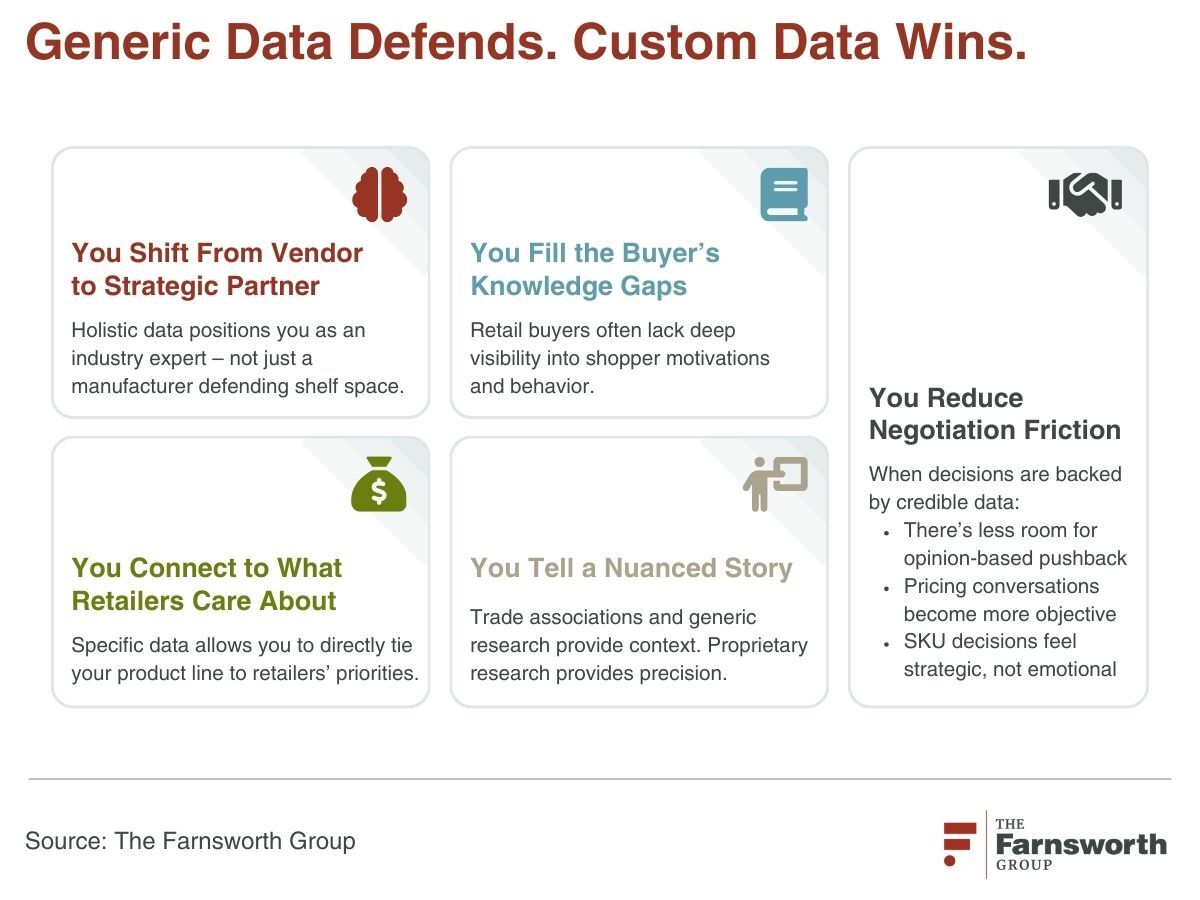
Oftentimes, national account managers at retailers, dealers and distributors don’t have complete insight into the motivations and purchase preferences of their shoppers, even though they’re trying to grow their product categories and sales across categories. If you do market research ahead of time, you can provide data to fill in the gaps and help them.
In this case, you should take a step back and primarily concern yourself with the buyer, not just your brand or your product. Approach your product pitch from the retailer’s point of view. They’re aiming to be more successful in their category as a whole and build year-over-year growth; they need the product lines and demand generation strategies that will get them there. Your job is to preemptively consider what deciding factors they’ll take into account and have the data and insights on hand to explain how you fit into their goals and desired outcomes.

Data for Your Buyer Presentation Checklist
Presenting holistic data—beyond how your own products are performing on a store-by-store basis—enables you to fill the position of an industry leader and gain more leverage in negotiating.
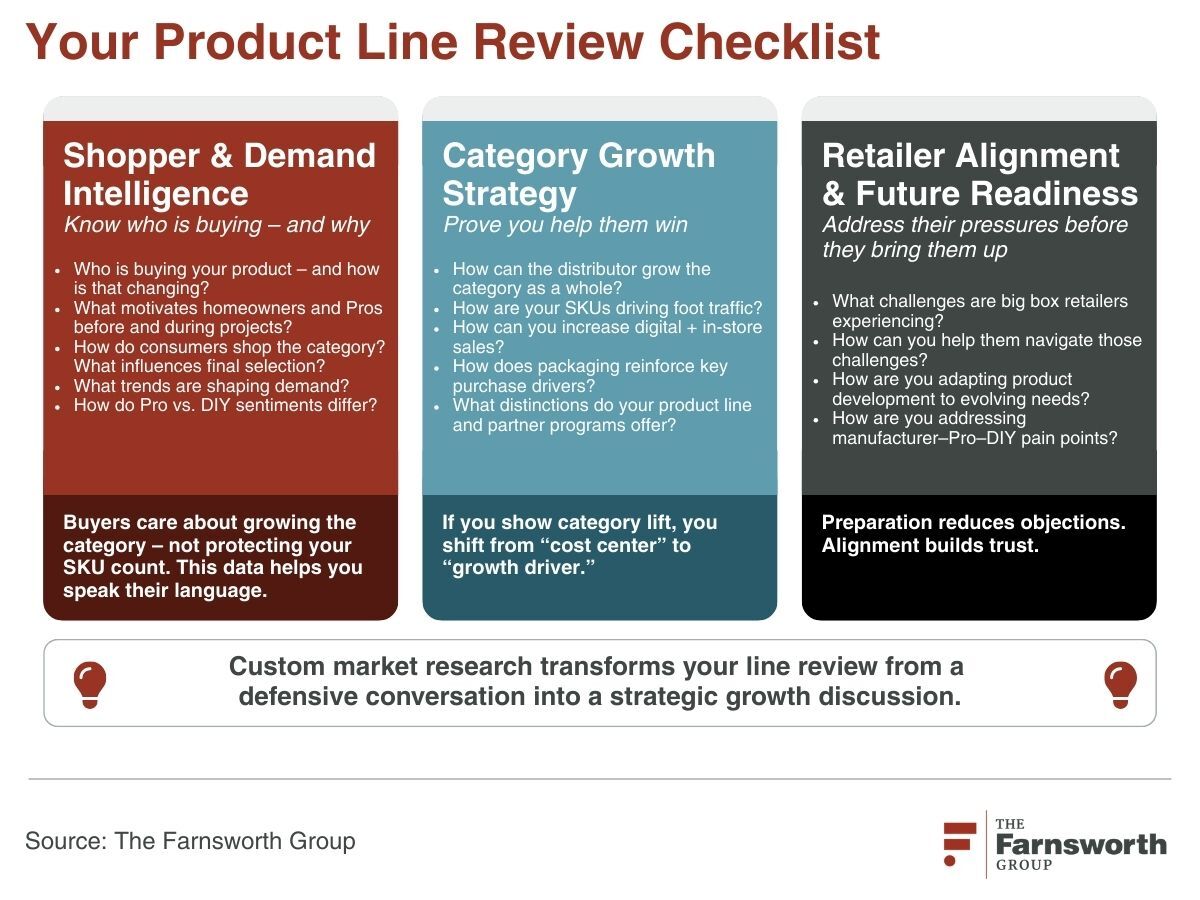
Here is some of the information you should analyze ahead of an annual product line review to fill that pivotal role in the retail relationship:
- Who is buying your product and why? Are there notable changes in who is purchasing your product? What is the market size or total addressable market (TAM) for the category and ideally the SKUs you offer?
- What trends are affecting the market? How are professional versus homeowner sentiments regarding current market forces impacting their purchase behavior and how might that affect the category?
- What motivates consumers before and during their purchase?
- What are key drivers of product selection and why? How do customers shop the category, and what is most important to them?
- How are you adapting during product development to address the evolving tastes, preferences and needs of individual customers through your product lines?
- How does packaging reinforce the drivers in a particular product category?
- Where are customers shopping vs buying, and why?
- What are you, as the manufacturing brand, doing to address challenges and pain points typically experienced between manufacturers and both pro and DIY customers?
- How are your SKUs driving foot traffic to the retailers or distributors? What distinctions can you offer through your product line and partner programs to make it work better for the retailer?
- How can you help drive traffic to your distributors to increase digital sales and physical sales?
Conducting customized market research enables you to glean answers to these questions and have the right facts and figures to address the buyer’s concerns throughout the process.
During a line review, you can make the case for your SKUs and negotiate a better outcome by coming prepared and demonstrating that you not only want your products to be successful, but you want the big box store to be successful as well. You understand the symbiotic nature of the relationship and the important roles you both play in supporting one another’s business objectives.
You can provide information on product trends, marketing solutions, and consumer motivations and behaviors, empowering the retailers to take advantage of what’s happening in the market and embracing innovations to stay competitive. From there, you can demonstrate why the retailer is more likely to succeed with your product lines in the mix than without them. With the right data on your side, the retailers have less room for argument. Plus, you position yourself as an indispensable partner and a leader in the industry.
While trade associations and government agencies may have generic, secondary research available that you can use to provide context to your dialogue during product line reviews, specificity is more valuable. Working with a custom market research firm to conduct proprietary research gives you the nuanced data you need to tell the story of your brand and your product line in a way that can better inform the decisions of your retailers.
Conducting Market Research for Your Product Category
As you prepare for your next product line review, take time to assume a more proactive role and make a strong argument for your SKUs based on concrete market analysis. Be prepared with talking points and partnership enablement ideas that will help big box stores or other retailers succeed in their product category.
The Farnsworth Group can assist you with market research that is tailored to your brand and your product lines. With various possible findings to seek regarding market sizing, product development. or customer usage and behavior, we can collaborate with you to develop a customized research approach that will produce detailed insights for you to utilize during your next product line review.

