
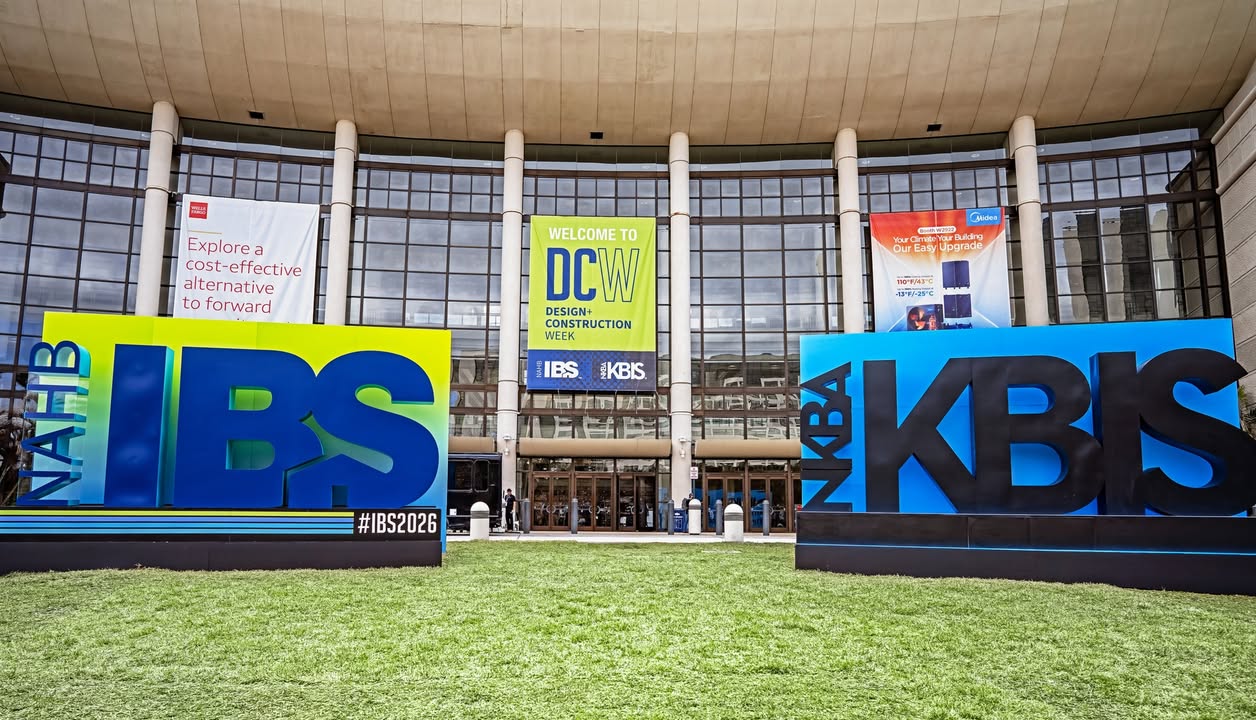
This year, conversations at IBS/KBIS 2026 were grounded in realism. Across discussions with manufacturers, retailers, builders, and other attendees there was consensus: 2026 is expected to be flat to very low growth for the building products industry.
For building product manufacturers and channel partners, that means it's still about running a competitive playbook. In a tight market, growth comes not from market expansion but from capturing share, strengthening loyalty, and sharpening value propositions.
Below are the key market and category signals that should be shaping your strategies for the year ahead.
Housing Market Macro-Economic Signals:
1. A Realistic Outlook for 2026: Competing in a Flat Market
Unlike the cautious optimism that many carried into 2025, the mood around 2026 projections felt pragmatic. Most industry conversations pointed toward flat or modest growth at best.
In low-growth environments:
- Brand visibility becomes more important
- Customer experience (CX) influences repeat purchase
- Merchandising execution drives conversion
- Loyalty strategies protect share
Manufacturers and retailers must prepare to fight for every point of market share, and defend it aggressively.
2. Budget-Constrained Consumers Are Reshaping Product Strategy
Economic pressure on homeowners was a dominant undercurrent in conversations at IBS/KBIS this year. We are seeing:
- Reduced savings rates
- Declining disposable income
- Increasing credit card debt
- Rising late payments
- Persistent shelter inflation
- A softening job market
Translation: Homeowners are less confident in the future of the economy than they were even during the height of the pandemic. As a result, discretionary home improvement spending is becoming more intentional and scrutinized.
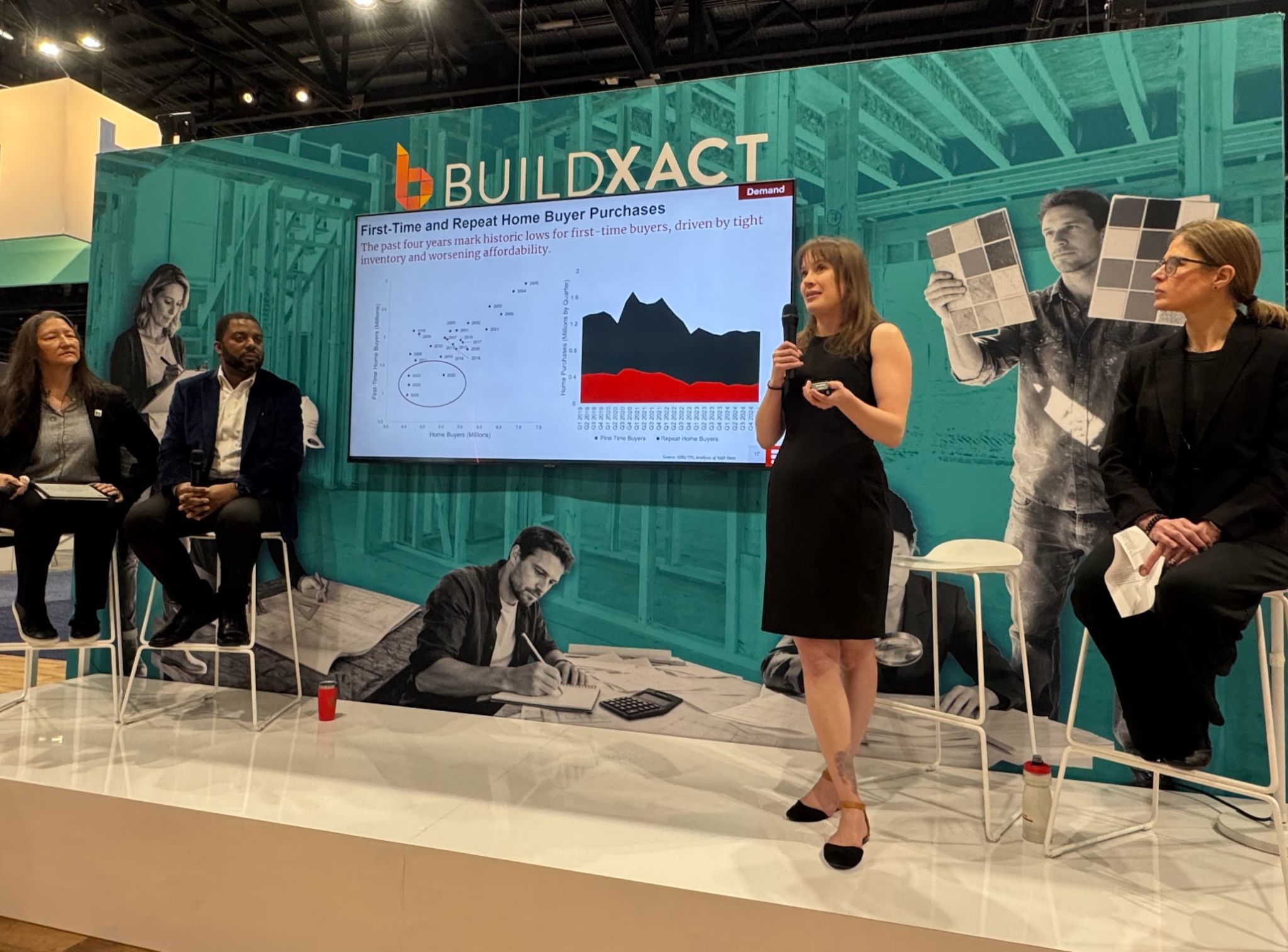
Strategically speaking, for manufacturers, this means renewing emphasis on:
- Opening Price Point products (think the "Good" options of the "Good, Better, Best" model)
- Value-engineered product development
- Competitive assortments without sacrificing margin
- Tiered product strategies that preserve brand equity
Consumers still want to undertake home improvements, but affordability and justification matter more than ever.
"The middle of the market is getting squeezed. In a flat environment, consumers are either trading down to protect their budgets or continuing to spend at the high end if they can. Brands sitting between value and luxury need a sharper reason to win." - Karen Barnes, Senior Research Advisor
3. Remodeling & Existing Home Projects Represent Near-Term Opportunity
While new home construction faces strain, remodeling continues to present opportunity.
Builders shared that:
- A larger portion of their mix is leaning toward remodel activity
- Aging housing stock continues to require updates
- Homeowners express desire for improvements, even if timing is cautious
Mobility rates remain low, meaning homeowners are staying put longer. That creates demand for:
- Aging-in-place upgrades
- Energy efficiency retrofits
- Functional kitchen and bath improvements
- Maintenance and repair products
So, the opportunities exist; it's just that the industry must give homeowners confidence and accessible options to activate on projects in the current macro-economic environment.
Ecosystem Thinking is on the Rise in Various Ways
4. Category Convergence Requires Cross-Functional Innovation
From integrated kitchen systems to multi-purpose exterior products, category boundaries are blurring. This creates differentiation opportunities for manufacturers that can innovate across traditional category lines or build modular, combinable platforms that appeal to broader specification and distribution pathways.
"Innovation wasn’t isolated. It spanned structural, functional, and connected systems." - Adam Mowrey, Business Development Manager
5. Integrated Ecosystems Increase Stickiness
Homeowners and pros are showing greater interest in categories that integrate seamlessly with other systems, whether in whole-home design coordination or connected smart features embedded into traditionally mechanical products.
Across smart systems, HVAC, and building envelope categories, ecosystem thinking continues to grow. As the industry advances, products that...
- Integrate across platforms
- Align aesthetically across rooms
- Connect digitally where appropriate
…create stronger relationships with builders and homeowners.
Plus, ecosystem participation increases switching costs, which is both a strategic advantage for some and a headwind for others when in a flat market.
Manufacturers that design for ecosystem compatibility (e.g., coordinated finishes, compatible control interfaces, data-ready systems) are seeing stronger resonance with channel partners.
“As digital connectivity options across platforms increase and systems become increasingly complex, connectivity is becoming table stakes. We’re looking forward to further innovation that not only connects more systems in a single platform, but provides opportunities for greater efficiency. We’ll see this efficiency not only within the systems themselves, but also in provisioning, maintenance, and real-time modification.” Eric Voyer, Senior Consultant
6. Channel Partners Prioritize Strategic Support, Not Just Product Access
Speaking of channel partners, one clear takeaway from our team’s discussions: channel partners want deeper strategic support from manufacturers, including training, go-to-market alignment, flexible logistics, and co-marketing resources. Manufacturers perceived as partners in business outcomes rather than product suppliers are winning more meaningful shelf and project placement across retail and Pro supply networks.
In slower cycles, product doesn’t sell itself. Subsequently, merchandising and channel execution matter more than ever. Manufacturers who support their channel partners with strategic tools, not just SKUs, are better positioned to protect shelf space and project specifications.
"Engaging with end users and will be key to keep the voice of the customer front and center as competition this year will be strong. Find ways to help pros, homeowners, retailers, and dealers alike understand how you will be a partner with them in a competitive market. Be an advocate and trusted partner--that will be the way to win this year." - Taylor Pence, Senior Research Advisor
Customer Expectations and Purchase Decision Drivers Are Shifting
7. Channel Dynamics Reflect Shifting Buyer Expectations
Retailers and builders alike noted that products aligned with evolving buyer expectations, such as smart home readiness, sustainability claims, and labor-saving design, perform better at point of sale. This means manufacturers must align not just with pros, but with the expectations that pros are hearing from homeowners and remodelers in their markets.
8. Data-Driven Product Decisions Are Rising
Those shifting buyer expectations are exactly why retailers and builders are increasingly using sales and retail data, customer usage patterns, and customer feedback to influence their decisions.
Manufacturers investing in data feedback loops, whether through CRM insights, post-purchase satisfaction surveys, or channel-level analytics gathered through market research are better positioned to tailor assortments and forecast demand with precision. This trend is accelerating with digital enablement tools built into both sales and product management workflows.
9. Labor Saving Features Are Strategic Differentiators
This is not new, but it is important to keep top of mind. Our team continued to notice that products are being evaluated through the lens of installation reliability and labor efficiency. Products that demonstrably reduce job-site labor and callbacks are helping manufacturers win in a market still facing labor shortages and cost pressures.
10. Product Educators Outperform Feature-Push Approaches
Our team consistently heard that education-rich sales engagements outperform traditional feature push. Pros and retailers want to understand how a product solves real problems (in other words, why it’s better, in context of their customers’ needs, not just what it does). Manufacturers investing in educational resources (install guidance, ROI calculators, pro demos) are seeing greater adoption across channels.
11. Value Clarity Wins in Tight Economic Cycles

When dollars are tight, complexity loses.
Across categories, products that clearly articulate...
- Cost savings
- Labor savings
- Performance longevity
- Energy efficiency ROI
…are resonating more strongly with builders, retailers, and homeowners.
In 2026, the winning brands won’t necessarily be the most innovative, they’ll be the ones that can clearly communicate why their product is the option to choose.
In B2C environments, homeowners are seeking a solution they can trust, easily understand, and easily install even with little to no experience doing so. In B2B environments where Pro buyers are time-pressed and risk-averse, clarity about ROI, whether in labor savings, performance gains, or cost predictability drives preference.
"While there are challenges ahead for the Building Products, Home Improvement industry for this year, there are ways to win. Value Proposition will be key and that means listening intently to your customer. Know what they want, when, how and why so your product, brand, channel and marketing teams can deliver." -Grant Farnsworth, President and Senior Consultant
Winning in 2026 Requires Listening Deeply & Responding Quickly
While the building products and home improvement industry faces challenges in 2026, there are clear paths to success.
It starts with intently listening to your customer:
- What do they want?
- Where do they plan to buy?
- How do they evaluate options?
- Why do they choose one brand over another?
Understanding these drivers empowers product, brand, marketing, and channel teams to deliver sharper value propositions and more targeted strategies.
In a tight market, assumptions are expensive. Insight is strategic advantage.
Manufacturers that invest in truly understanding their customer and their category specific market, delivering clarity of brand value, innovating products to align with changing customer demands, and data-enabled decision frameworks will be best positioned to capture growth in a changing market.
Custom Research to Help You Gather Business Critical Insights
Through a broad range of qualitative and quantitative primary research methodologies, our team at The Farnsworth Group delivers strategic insights for building product manufacturers and retailers.
We can help your brand(s) understand what today's buyers want and if your brand holds up to those expectations. Then you'll get clear recommendations to drive smarter innovation and strategic growth. If you want an actionable growth strategy backed by trustworthy data, let’s talk.

