
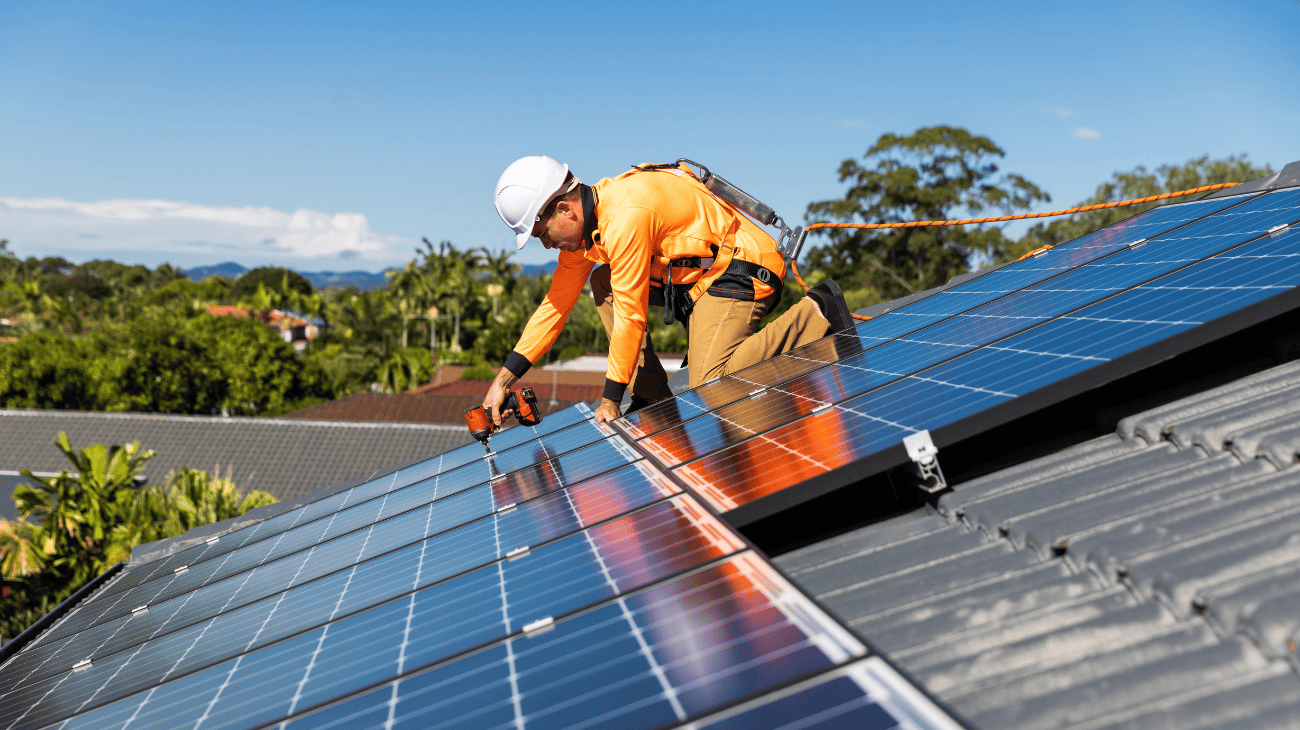
The energy landscape is evolving, both in the United States and on a global scale. Influenced by emerging clean energy technologies, the geopolitical climate, an aging housing inventory in the U.S., and varying customer opinions, attitudes and behaviors toward alternative energy sources, more change can be expected in 2026.
The demand for natural, renewable and reliable energy—including solar, wind, hydro, and geothermal—is growing, with solar making especially notable surges domestically and abroad. However, new innovations and technologies will be critical in the coming years to make generators, solar equipment, and other alternative energy products dependable, desirable, and cost-effective and for companies to stay competitive in the market for both DIY homeowners and contractors.
Navigating this ever-changing environment should motivate manufacturing brands and suppliers to dig deeper into the myriad factors at play in the development and distribution of products utilized in alternative energy projects.
State of the Market for Alternative Energy and Key Trends in 2026
For companies looking to expand or keep pace in the alternative energy products market, it’s important to look at general trends and what factors are impacting demand among customers and then getting more tailored insights for your brand through custom research. As we start off the new year, take a look at some of the trends affecting the demand for solar, generator and alternative energy products:
1. A Third of Homeowners are Concerned About Energy Performance
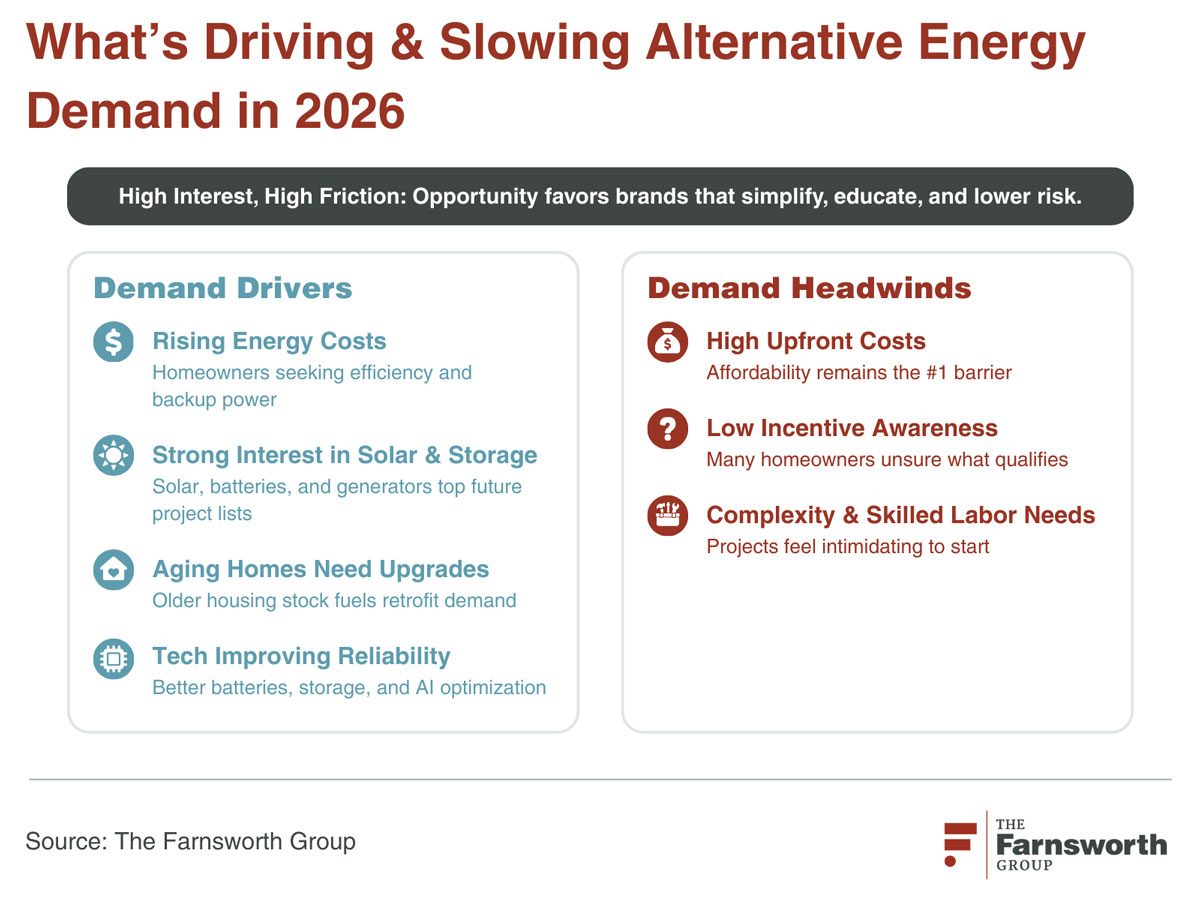
A third of Homeowners have concerns about their home’s environmental or energy performance. Of those concerned, half have moderate to major concern for their home’s green issues, according to the Healthy & Safe Home and Environmental & Energy Performance Attitudes report, completed by The Farnsworth Group in conjunction with Harvard's Joint Center for Housing. For those focused on environmental and energy issues, energy costs and wasteful energy use are the primary concerns. Increased utility bills and overall home operating costs are driving this focus on energy efficiency and exploring alternative energy sources. In particular, interest in solar power seems to be growing. While 14% of homeowners completed solar activities in the past year, according to 2025 data, about 33% had plans to do so in the future. Additionally, roughly one-third of homeowners surveyed are wanting to pursue a backup generator project in the future.
2. Alternative Energy Projects are Deterred by Costs
While there is growing awareness and interest in projects involving generators, solar power, and other alternative energy products, homeowners also face deterrents to completing these types of energy upgrades and improvement projects. Cost concerns pose the biggest issue, preventing projects for nearly three-fourths of homeowners who have environmental and/or energy concerns. Mortgage rates remain elevated, affordability is near generational lows, and household incomes have not fully kept pace with inflation and borrowing costs. Lack of time and inability to obtain funding are other obstacles that can prevent projects from progressing. From a contractor perspective, the increasing cost of materials is also a constraint. Additionally, installing products in these categories often requires specialized knowledge and skilled professionals, which can be a barrier. Our 2026 Building Products Guide offers greater insight into how various stakeholders—including DIY homeowners, builders, remodelers, architects and other tradespeople—evaluate products and seek information, as well as what influences their trust in specific brands. It’s important to pay close attention to shifting market conditions that may reshape priorities, from cost pressures to supply chain dynamics.

3. Aging Housing Stock Drives Renovations and Updates
History shows that remodeling, repair, and replacement categories are less volatile than new construction in uncertain or sluggish markets. This can provide an opportunity for professionals in these fields. In the United States, the median age of owner-occupied homes is now 43 years, rising steadily since the Great Recession, according to our most recent Construction and Remodeling: Industry Drivers and Forecast report. This aging house stock is due to underbuilding of new homes, as well as older homes remaining in the inventory for longer periods of time. However, as older homes require more maintenance and upgrades, this trend drives growth in the remodeling, repair and maintenance market. Homeowners in older houses also may be looking to upgrade their space with newer technologies, particularly when it comes to energy and utilities.
4. Familiarity with Incentives for Energy Projects Remains Low
With cost proving to be a barrier for remodeling projects and upgrades, one way manufacturing brands and distributors can bridge the gap is by sharing information about potential incentives. For example, familiarity with incentive programs is broad but shallow, with fewer than one in five homeowners highly familiar, based on data from the 2025 Government Incentives and Energy Retrofit Study by the Home Improvement Research Institute (HIRI). Gaps peak among older, rural, lower-income, and less-experienced DIYers, although confusion about eligible improvements span demographics, reflecting structural rather than political divides. When it comes to energy-related projects and products, brands can target affordability and trust messaging simultaneously, clarifying eligibility while tailoring outreach to skeptical older and rural homeowners.
5. Advances in ‘Electrotech’ Propel Global Energy Growth
From a global perspective, the “electrotech” revolution accelerated in 2025, driving demand for scalable electricity-based technologies—such as wind, solar, batteries, EVs, and heat pumps, according to Ember, an energy think tank that aims to accelerate the clean energy transition with data and policy. China leads the way, accounting for half of global solar panel installations and roughly two-thirds of global growth in electricity demand since 2019. However, there are strong emerging markets in India, Vietnam, Mexico and South Africa. This trend gives insight into the outlook for the alternative energy market and how manufacturing brands can respond.
6. Solar and Battery Storage Led New U.S. Generating Capacity Additions in 2025
A significant amount of utility-scale electric-generating capacity was added to the U.S. power grid in 2025, according to the U.S. Energy Information Administration. The amount was expected to be a 30% increase from that added in 2024, which already as the largest capacity installation in a single year since 2002. Battery and storage together were projected to account for approximately 80% of the added capacity, with wind and natural gas expanding capacity by about 12 gigawatts (GW), based on data from the EIA. In particular, solar power contributed more than 50% of the increase.
7. Innovations Support Reliability and Cost-effectiveness of Alternative Energy Products
Solar is becoming more cost-competitive and reliable in the U.S. and abroad as a result of rapid storage deployment and declining battery costs. According to Ember, solar paired with batteries is already delivering 24-7 electricity in high-insolation areas, and as storage costs continue declining, these technologies are increasingly presenting a scalable means to achieve clean and reliable energy. Additionally, the development of new types of battery storage—like flow and solid-state batteries—are enabling solar, wind, and tidal energy sources to be better integrated into energy grids.
8. AI is Likely to Continue Playing Notable Role in Energy Developments
The artificial intelligence (AI) race that picked up steam in 2025 is likely to continue impacting not only energy infrastructure and management, but also the need to expand capacity to meet demand. For example, as noted in an article on clean energy trends by Forbes magazine, AI is being used to further predictive analytics and smart energy optimization solutions, which should allow for more precise forecasting of energy demands and better optimization of energy generation, storage and distribution in the future. Additionally, the growth of AI data centers has become a significant issue as it relates to energy consumption. Countries and regions that upgrade infrastructure and scale alternative energy sources, such as wind and solar, to meet the demands of AI have a greater opportunity to capitalize on the digital economic growth that is on the horizon. Manufacturing brands and suppliers can explore how AI is affecting their markets and customer preferences, as well as how it can be used to optimize products that homeowners and contractors require to tap into alternative energy sources.
What Questions Should You Be Asking Heading Into 2026?
The alternative energy market presents opportunities for construction and home improvement products manufacturers and suppliers. However, it’s a highly nuanced field, impacted by numerous variables. Here are some of the critical questions that marketing leaders, product managers, brand managers, and insights teams should be asking in 2026 across five core areas if they’re looking to grow in this market:
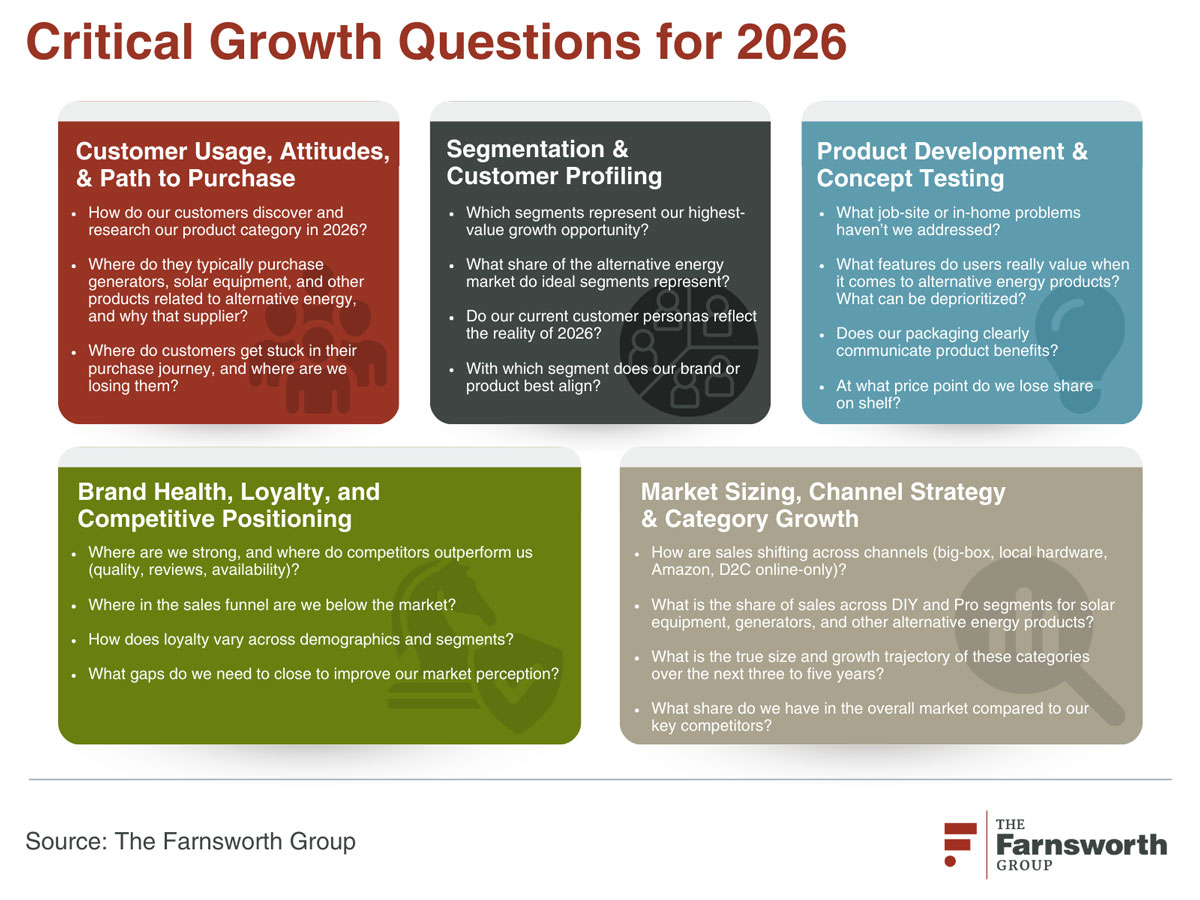
Customer Usage, Attitudes, and Path to Purchase
· How do our customers discover and research our product category in 2026?
· Where do they typically purchase generators, solar equipment, and other products related to alternative energy, and why that supplier?
· Where do customers get stuck in their purchase journey, and where are we losing them?
Segmentation & Customer Profiling
· Which segments (Generational, Attitudinal, Occasion-Based) represent our highest-value growth opportunity?
· What share of the alternative energy market do ideal segments represent?
· Do our current customer personas reflect the reality of 2026 (video-first, digital-first, availability-driven)?
· With which segment does our brand or product best align?
Product Development & Concept Testing
· What job-site or in-home problems are customers still trying to solve that we have not addressed?
· What features do users actually value when it comes to alternative energy equipment and products, and what can be deprioritized?
· Does our packaging or in-store-facing content clearly communicate product benefits?
· At what price point do we lose share on shelf?
Brand Health, Loyalty, and Competitive Positioning
· Where are we strong, and where do competitors outperform us (quality, reviews, availability)?
· Where in the sales funnel are we below the market?
· How does loyalty vary across demographics and segments?
· What gaps do we need to close to improve our market perception?
Market Sizing, Channel Strategy & Category Growth
· How are sales shifting across channels (big-box, local hardware, Amazon, D2C online-only)?
· What is the share of sales across DIY and Pro segments for solar equipment, generators, and other alternative energy products?
· What is the true size and growth trajectory of these categories over the next three to five years?
· What share do we have in the overall market compared to our key competitors?

Making an Impact in the Alternative Energy Market in 2026
The outlook for alternative energy projects is positive, but there are several factors that will have an impact in 2026 and beyond. Knowing the right questions to ask and extracting the best data is critical. Our team at The Farnsworth Group can work with you to conduct custom market research and get more robust and meaningful data and insights into complex building and remodeling products markets such as this.
