

Hardware and fasteners are used for a wide variety of both interior and exterior home improvement projects, from roofing and siding installation to outdoor structure construction and electrical and plumbing.
Because of their diverse applications, these product categories experience steady demand from both DIY homeowners and industry professionals, even in the tight home improvement market of 2026, where budget sensitivity is noticeably high.
For manufacturers and suppliers, knowing how and where homeowners and industry professionals are purchasing their hardware and fasteners, along with what influences their selections, is essential for making strategic decisions around product development and marketing.
What is Trending for the Hardware Market in 2026 and Beyond?
Looking ahead, the demand for fasteners and hardware demand remains steady, supported by record remodeling spend and consistent pro activity, as nearly every project, large or small, requires reliable, readily available fastening solutions.
Here are a handful of current trends in the hardware market, as well as future forecasts, to factor into your company’s decision-making process for the remainder of 2026 and into 2027:
1. Hardware Market Segment Growth Expected to Rebound
The hardware segment of the home improvement market has seen steady growth from 2020 to 2025, according to the most recent U.S. Home Improvement Products Market Forecast from the Home Improvement Research Institute (HIRI). In terms of dollar amount, the consumer market for hardware was roughly eight times the value of the professional market in 2025, although the professional market saw significantly more growth in this product category over the past several years.
What is the outlook for the hardware market over the next five years?
When compared to the preceding five-year period, the hardware market is expected to have a slightly lower compound annual growth rate (CAGR) over the next five years, from 2026 to 2030. However, the outlook still includes healthy and sustained growth, according to HIRI’s research. Looking ahead, the consumer market for hardware is expected to have a higher CAGR than the professional market.
Based on data from The Farnsworth Group’s Construction and Remodeling: Industry Drivers and Forecast, hardware is the second-most purchased product category for projects involving the exterior envelope. For interior finish projects, hardware is also purchased frequently. About 26% of homeowners who completed projects in the past 90 days purchased hardware, according to the report.

2. Remodeling is Driving the Demand for Hardware and Fasteners
When it comes to macroeconomic trends that impact the home improvement industry, single-family construction is expected to decline in 2026, while multifamily construction is projected to see modest increases as renting continues to be a solution to first-time buyer affordability, according to The Farnsworth Group’s Fasteners & Hardware: Market Insights Report. Meanwhile, the remodeling sector is expected to see flat or modest revenue growth 2026, as high home values, locked-in low rates, and the aging housing stock in the U.S. all continue to influence “spend at home” behavior. As a result, remodels and repairs will likely help spur growth in the hardware market.
What are the Top Challenges Facing Hardware Manufacturers?
However, even for smaller projects and remodeling, customers are highly budget-sensitive at the time. Faced with lower disposable income, they are scaling back project scopes and prioritizing essentials. As a category, hardware has the benefit of being crucial to a majority of construction and remodeling projects, but manufacturers should still be aware of current consumer sentiment and how that’s affecting their spending on home improvement activities in 2026.
3. Durability is a Top Priority for Consumer Hardware Purchases
For homeowners, durability is a top priority when deciding what hardware to purchase. They want confidence that if they invest in a product, it will last. For hardware products, quality is another priority that drives consumers’ purchasing decisions, followed by price. This data suggests that consumers are willing to pay a little more if they believe a product will last longer and make it so they don’t have to do maintenance as frequently. Meanwhile, contractors and other professionals tend to be influenced by price, particularly if they’re on a constrained budget for a project.
Brands and suppliers must offer breadth and depth to provide pricing options and meet availability requirements. Both remain critical in a flat market where budget and timelines matter.
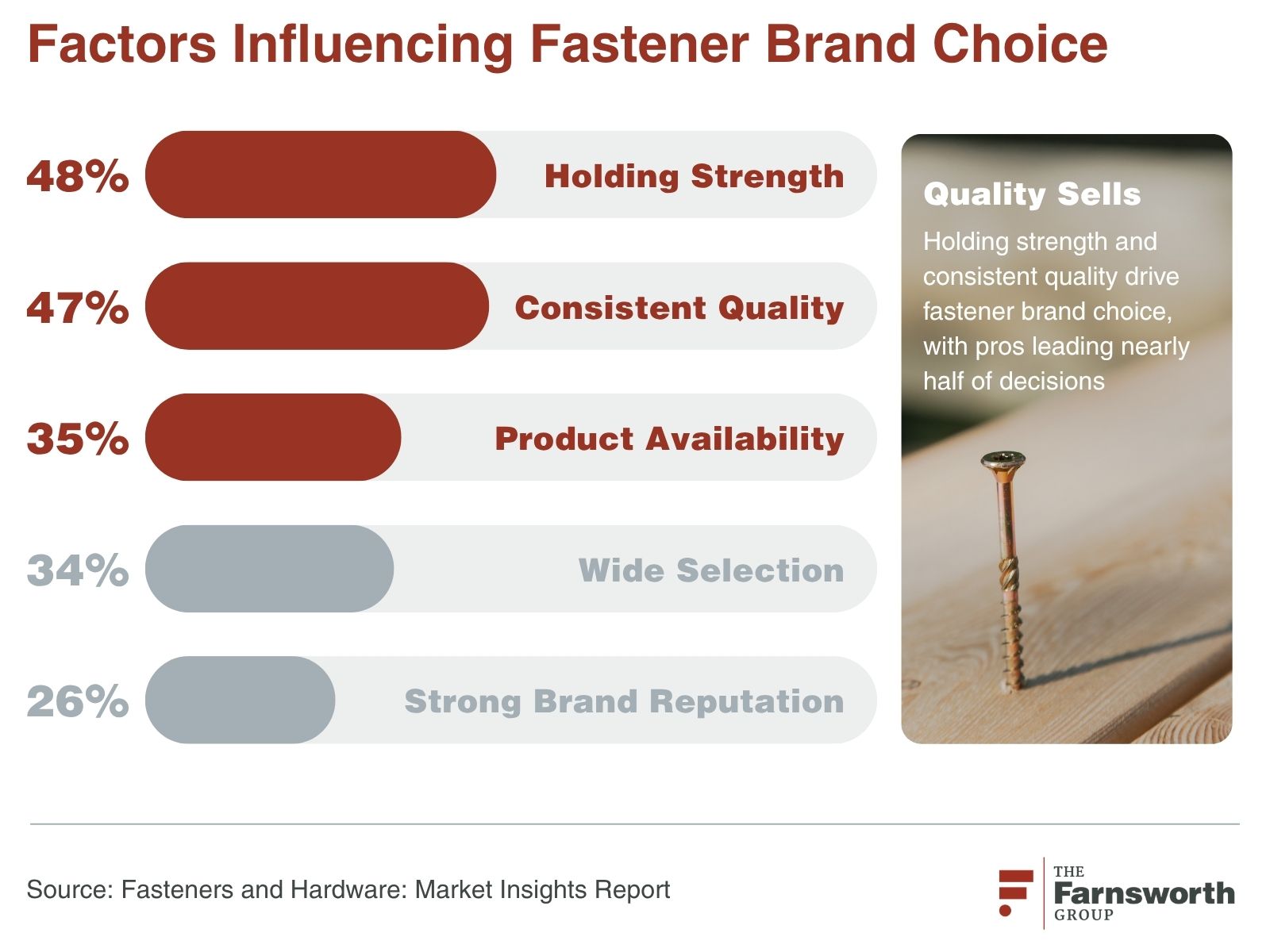
4. Consistent Performance and Availability Drive Hardware and Fastener Choices
Fasteners and hardware may not be highly visible, but they impact the overall quality of a home improvement project, presenting a fairly high level of risk if they don’t perform as intended. That’s why industry professionals choose their purchases with discretion. The top three factors influencing fastener brand choice among pros include:
- Holding strength (48%)
- Consistent quality (47%)
- Product availability (35%)
Professionals mostly use their preferred brands for fasteners and hardware, using their non-preferred brand for only 18% of projects. However, they’re slightly more open to changing brands than suppliers, with 51% saying they would use a different brand if their preferred supplier no longer carried their preferred fastener brand.
5. Pros are the Primary Decision-Makers for Fasteners
When choosing fasteners, professionals rely most on their own judgement, with nearly half stating they have the heaviest influence on decision-making. For this product category, homeowners carry less weight than they typically do for most categories (especially finishing products), while builders/general contractors, suppliers, and installers also have some leverage.
Because professionals have such strong influence when it comes to purchasing hardware and fasteners, it’s important to be aware of their behaviors and sentiments. For example, according to The Farnsworth Group’s Fasteners & Hardware: Market Insights Report, nearly half of pros tried a new suppliers in the past year, driven primarily by location, availability, and price. After switching, nearly half used both their original and the new supplier, while roughly one-quarter went back to their original suppliers, demonstrating the strength of existing relationships.
This provides some insight for manufacturing brands. To maintain loyalty, they must ensure high-quality products reach suppliers on time, in the quantities needed, at price-points that achieve their budgets.
6. Interior Hardware Offers Opportunity for Creativity
Interior hardware—from cabinet hinges and handles to shelving brackets and hanging devices—offer a cost-effective and simple way for homeowners to personalize their space while doing repairs or small renovations. That’s why homeowners tend to desire more unique and customized looks when it comes to this type of hardware. These items enable them to add their signature touch without making major, long-lasting changes or investments.
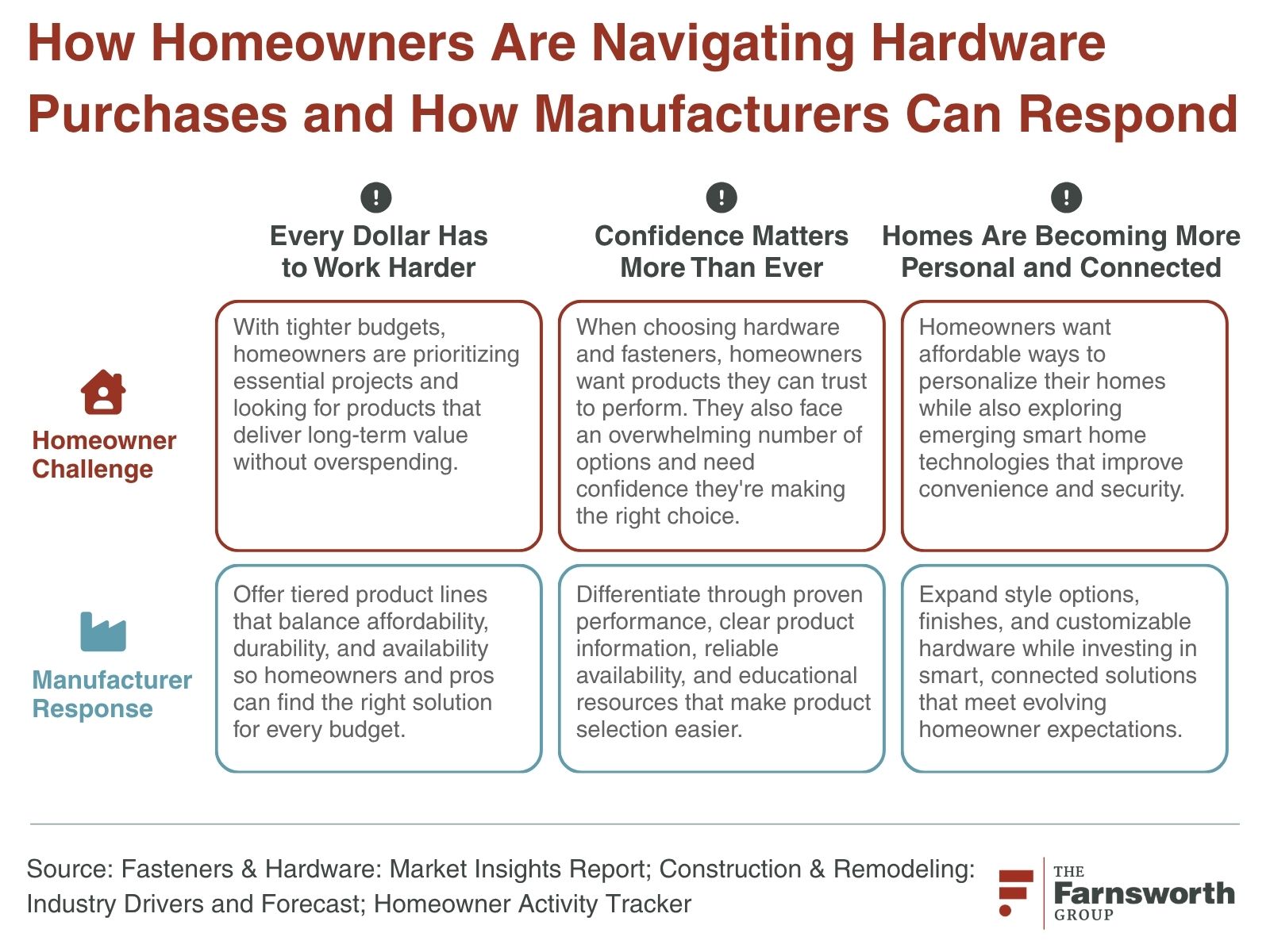
Manufacturing brands can tap into this desire for customization by offering interior hardware and fasteners in a variety of styles and at different price points to meet homeowners where they’re at as they undertake interior projects. This is especially pertinent, as our Homeowner Activity Tracker for Q1 2026 shows that roughly 72% of homeowners were planning an interior project over the next 12 months.
7. The Smart Market has a Growing Impact on Keyed Locks
The demand for keyed locks still outweighs that for keyless/remote features and smart/connected exterior doorknob and lock sets. However, there is growing interest in smart features, biometric features, and keyless/digital features that hardware manufacturers and suppliers should keep an eye on.
There will be more competition, and from emerging brands and new entrants to the home improvement market, in response to rising demand from homeowners, property managers, and facilities managers who want to modernize residential buildings with emerging technologies. Companies that focus on integration, connectivity, and comprehensive solutions will be in the best position for success.
Exploring Current Market Trends for Hardware Purchases
Staying on top of consumer trends in various market segments enables manufacturers and suppliers to make informed decisions at every level of operation, from identifying new sales opportunities to developing and marketing products that are tailored to your audience’s unique needs.
With the help of our recognized team of market intelligence experts at The Farnsworth Group, you can conduct customized market research to further understand what’s most important to your customers and what motivates their behavior and preferences along the purchase journey.
Simply schedule a consultation to learn more about the answers you would be able to get to improve your brand health and market share in the hardware market and the home improvement marketplace in general.

Frequently Asked Questions
What factors are driving hardware market growth?
Hardware and fasteners benefit from steady market growth, as nearly every project, large or small, requires reliable, readily available fastening solutions. While single-family (SF) home construction is lagging, multi-family (MF) construction has seen steady gains over recent years. Additionally, remodeling and repairs help drive hardware market growth. There is growing interest in smart features, biometric features, and keyless/digital features that hardware manufacturers and suppliers should keep an eye on.
What is the outlook for the hardware market over thenext five years?
Over the next five years, the demand for fasteners and hardware is likely to remain steady, supported by record remodeling spend and consistent pro activity. Multifamily construction is projected to see modest increases as renting continues to be a solution to first-time buyer affordability. Meanwhile, the remodeling sector is expected to see flat or modest revenue growth 2026, as high home values, locked-in low rates, and the aging housing stock in the U.S. all continue to influence “spend at home” behavior. As a result, remodels and repairs will likely help spur growth in the hardware market.
Whatare the Top Challenges Facing Hardware Manufacturers?
One of the top challenges facing hardware manufacturers is that, even for smaller projects and remodeling, customers are highly budget-sensitive in 2026. Faced with lower disposable income, they are scaling back project scopes and prioritizing essentials. As a category, hardware has the benefit of being crucial to a majority of construction and remodeling projects, but manufacturers should still be aware of current consumer sentiment and how that’s affecting their spending on home improvement activities in 2026.
