

Siding is an essential exterior component for many residential and commercial buildings. When choosing surface solutions, property owners often express decision factors about function, or how well they withstand weather and other intrusive elements, and form, or how they contribute to the building’s aesthetics.
In recent years, the siding industry also has been influenced by demands for energy efficiency, sustainability, easier/faster installation, and increased durability and customization. New technologies and innovations have shaped the market, providing manufacturers with fresh ways to meet the needs and preferences of customers.
The outlook of the construction industry is strong, bolstered by a large residential renovation segment, which will contribute to demand for siding materials in the coming years.
What is the Market Size of the Siding Industry in the U.S.?
The siding market is experiencing steady growth. Data from Global Growth Insights indicates that the global siding market is expected to grow from $99.92 billion in 2025 to $104.13 billion in 2026. With a projected compound annual growth rate (CAGR) of 4.21%, the market should expand to $150.92 billion by 2035.
Because of its low cost, ease of maintenance, and variety of colors, vinyl continues to claim the largest siding market share, or approximately 46% of the market, with fiber cement also a highly popular material for exterior surfaces. Sustainable materials are also seeing a higher rate of adoption.
What are the Main Factors Driving Growth in the Siding Market?
North America holds the highest share in the siding market, or about 41%, followed by Europe, which accounts for 27% of the market and is currently driven by sustainable building practices. The Asia-Pacific region holds a 26% share in the global siding market, driven by infrastructure expansion and rapid urbanization. New construction has stagnated in the states over the past couple of years, but demand within the home repair and remodeling sector has remained relatively steady, presenting growth opportunities for industry professionals and manufacturers.
What Trends Will Influence the Siding Industry in 2026?
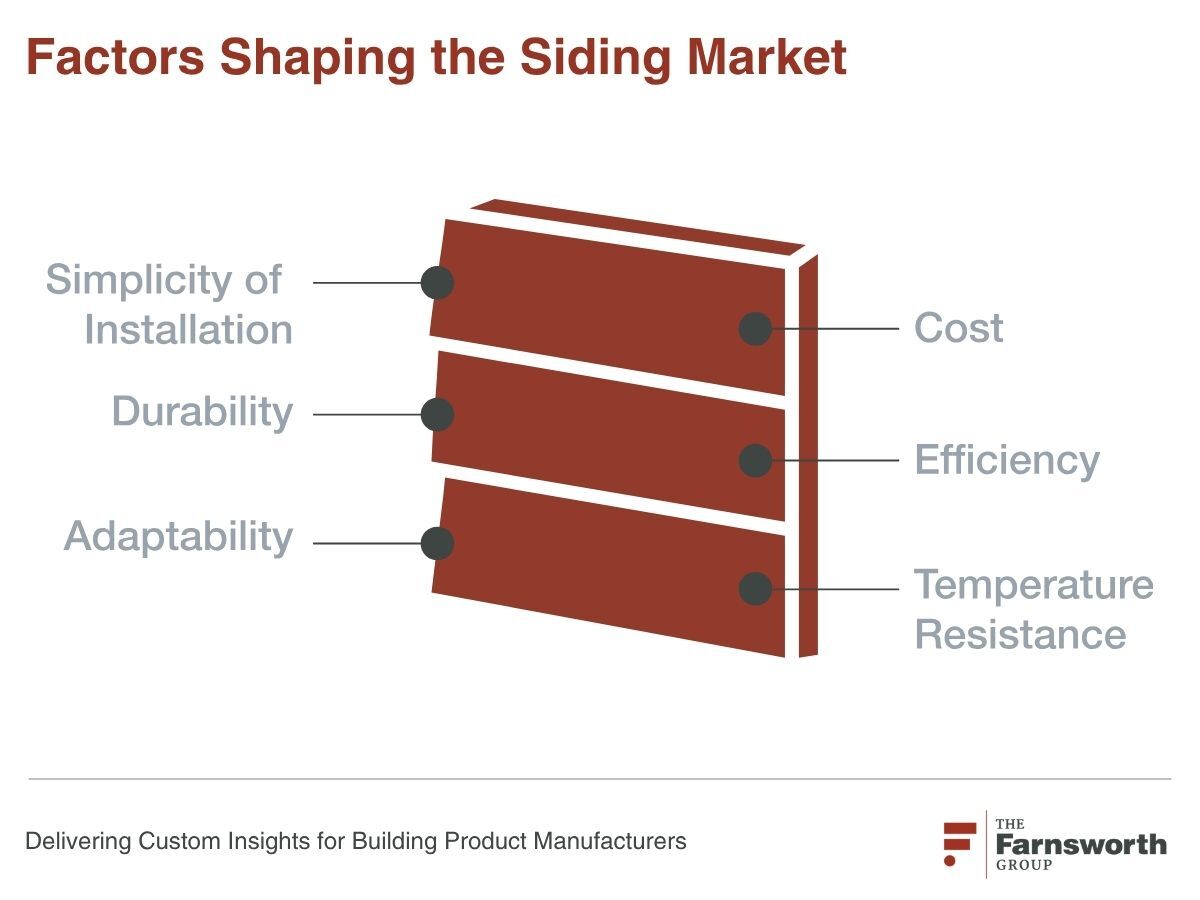
A variety of factors shape the siding market at both the regional and global level, including cost, efficiency, temperature-resistance, simplicity of installation, durability, and adaptability. Manufacturers and distributors are responding to changes in customer preferences and demands, as well as challenges from inclement weather, supply chain disruptions, and skilled labor shortages.
As we look ahead to the remainder of 2026 and into 2027, here are some of the top trends in the exterior insulation and finish system siding market:
1. Siding Demand is Supported by Remodeling and Renovation Activity
Headwinds persist for new single-family construction, while demand and home equity tailwinds support existing home and larger project activity into 2026. Both are constrained by limited disposable income, affordability pressures, and continued economic uncertainty. Meanwhile, based on data from The Farnsworth Group’s Siding Market Trends & Materials Report, remodeling is expected to reach a new high in 2026 of $524 billion as high home values, locked-in low mortgage rates, and aging housing stock influence “spend at home” behavior.
However, there isn’t a high demand for siding contractors, in particular. Only about 3% of homeowners hiring a siding contractor in the fourth quarter of 2025, down from 5% in the same quarter in 2024. Homeowners tend to go with general contractors and other generalists to do this type of work (for instance, about 34% hired a general contractor in Q4 2025).
2. Weather Resistance Drives Residential Siding Brand Choice
As extreme weather events become more common in the United States and abroad, companies are also responding to the consumer demand for low-maintenance siding materials that provide durability and longevity and can withstand various weather elements. Homeowners are concerned with protecting their homes and personal property, while also reducing the costs of long-term upkeep, and manufacturing companies are working to meet that demand as a way to capture a greater market share.
Based on data from the Siding Market Trends & Materials Report, weather resistance is the main factor influencing residential siding brand choices, with 49% of respondents putting it in their top three reasons for making a selection. Ease of installation and strong warranty are the second-highest ranked factors at 32% each.
Disaster mitigation and retrofitting represent a massive opportunity in the Western and Southeastern states due to increasing fire and high-wind events. However, there are also increasing opportunities throughout the country as the Midwest and Northeast experience increased weather events related to wind and moisture.
3. Siding is a Brand-Led Product Category for Pros
Professionals who install siding for their projects are more willing to switch suppliers than compromise on trusted products. On average, professionals claim it would take a price increase of up to 21% before they would switch brands. Additionally, if their supplier no longer carried their preferred brand, about 57% say they would go to a different supplier, while only 43% would be willing to switch to a different brand.
Availability, delivery reliability, and local support strongly influence purchase behavior, especially for time-sensitive exterior projects. For manufacturers, monitoring supplier switching patterns and service expectations can help protect share in a competitive distribution landscape.
4. Sustainability and Energy-Efficiency Spur Innovation
Siding is a key component when it comes to a structure’s energy efficiency, how well it regulates temperatures and protects the interior from external elements. With energy costs rising alongside inflation, building owners are looking at ways to maximize energy efficiency.
According to data from Global Growth Insights, eco-friendly siding materials have seen a 33% increase in market penetration over the past year, while sustainable building certifications have increased by 36%.
Siding Brands Adopting Eco-Friendly Innovations
CertainTeed, part of Saint-Gobain, is a leader in siding market when it comes to sustainability and eco-friendly options. They have launched a new line of sustainable siding products made from recycled materials, demonstrating the brand’s commitment to environmental stewardship. Additionally, Saint-Gobain is hoping to achieve net-zero carbon emissions by 2050. These types of developments will appeal to eco-conscious consumers.
There have been other sustainability-focused innovations from companies like James Hardie and LP Building Solutions, with the latter committing to a range of sustainable practices. Other notable players in this area include German siding companies Eternit GmbH and Trespa and Gentek Building Products, which recently launched a new line of energy efficient insulated siding. The EnFusion line is fortified with EPS (expanded polystyrene) to help seal out inclement weather elements.
These developments coincide with the Canada Greener Homes Grant program, the Energy Star program in the U.S., and other government initiatives that financially incentivize homeowners to utilize energy-efficient siding materials.
5. Integration of Smart Technology
Another trend in the siding industry is the integration of smart technology. Manufacturers are exploring options for items such as:
- Interactive designs
- Energy monitoring
- Built-in sensors
- Insulation efficiency
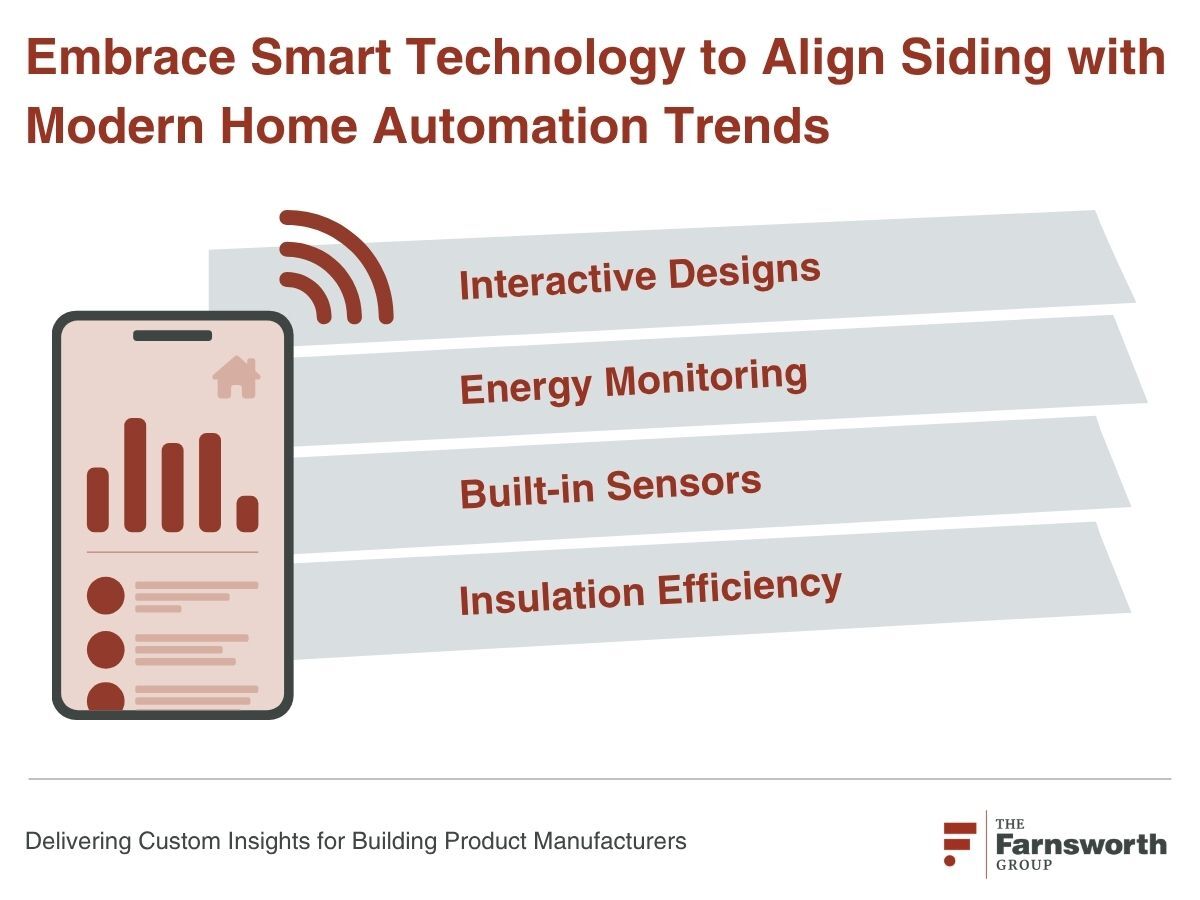
The goal of integrating siding and home automation systems is to enable homeowners and commercial building owners to be able to monitor and control certain features—such as security, temperature, and lighting—from a centralized location. Using remote access, schedules, and sensors, they have more control over the structure, no matter where they are, which offers peace of mind and much-desired convenience.
Building products manufacturers can tap into this trend by developing products that are compatible with automation systems and lend themselves to a cohesive living environment.
6. Providing Customizable Siding Solutions to Meet Aesthetic and Budget Preferences
Homeowners have a growing preference for personalized designs and unique aesthetics, which is prompting the proliferation of customizable siding options. This includes architectural versatility, from modern colors and finishes to siding materials that resemble natural textures.
Through a wide range of colors, textures, and styles, property owners can personalize the exteriors of their homes and commercial buildings, enhancing curb appeal and increasing property value.
Additionally, through custom design solutions for siding, homeowners can find the right materials to fit their budget, as well as their desired maintenance level and durability.
In 2026 and beyond, consumer demand for product diversifications presents opportunities for both the top players in the siding industry, as well as newcomers.

7. Strategic Partnerships and Collaborations Influence Industry
Across the market, manufacturing companies are collaborating with not only distributors, but also contractors and builders, to expand market reach, streamline supply chains, and try to reduce costs. From new product development and design to product improvements and marketing strategies, manufacturers benefit by aligning with changes in the research and purchasing habits of contractors and professional tradespeople, as well as what they expect and need from manufacturers to build brand loyalty.
In 2025, James Hardie partnered with Hover, a 3D property technology, to launch a digital design tool that incorporates Hover’s AI-driven platform. Titled Hardie™ Designer, it enables homeowners to preview an array of design options and see a visualization of how their exterior renovation will look using James Hardie products.
Another example of a strategic partnership started in 2024 when Lennar Corporation, a leading homebuilder in U.S., established a supply agreement with LP Building Solutions (LP), a manufacturer of high-performance building products, including LP® SmartSide® Trim & Siding.
Various industry stakeholders, from building companies and technology providers to manufacturers and suppliers, are finding ways to leverage strategic partnerships and collaborations that are mutually beneficial and allow both entities to expand their market reach.
Siding Market Research and Analysis for Industry Professionals
For building products manufacturers and distributors, customized market research can provide more extensive data and insights into the siding industry, including market sizing, segmentation, and customer preferences. It can help you understand your target audience and how your product category relates to construction and home improvement industries, enabling you to identify new opportunities for growth.
To equip your marketing, brand, channel and product teams with the information they need in order to launch successful campaigns, it’s important for them to know who to target, what purchase motivations to speak to, where to invest marketing dollars, and when to ramp up efforts.
That’s where custom market research into consumer behaviors can help. Regardless of your company’s goals, our team at the Farnsworth Group takes the time to understand your specific needs, leveraging decades of industry knowledge and creating customized research to guide your home improvement strategy.

