

From the moment your company generates the idea for a new building material or home improvement product to a successful launch, there will be several important product development phases or stage gates to traverse throughout your product development cycle. Each stage of the cycle requires customized research to give your company valuable market insights, test various product concepts, and determine which one is most worth pursuing.
Testing product concepts enables you to better understand how your vision aligns with your customers’ needs and where to most effectively invest in creating, marketing and distributing new building products in order to increase acceptance.
There are various concept testing methods you can use for market research during the product development cycle. Selecting the right solution for your venture depends on several factors, including your research objectives, how many concepts you’re testing, and your budget.
One of the most preferred approaches when it comes to product concept testing, packaging research, and pricing studies is monadic testing, as it supports focused and unbiased evaluation and gives you a clear idea of how prospective and existing customers are perceiving and responding to a specific item.
What is Monadic Concept Testing?
Monadic, or more specifically Proto-Monadic, is an approach used in product concept testing to ensure equal representation of individual concepts and to mitigate potential order bias when conducting a survey to collect data. It involves presenting your survey respondents or research group with one single product concept at a time, giving them the opportunity to evaluate the product on its own, before they rate different concepts side-by-side.
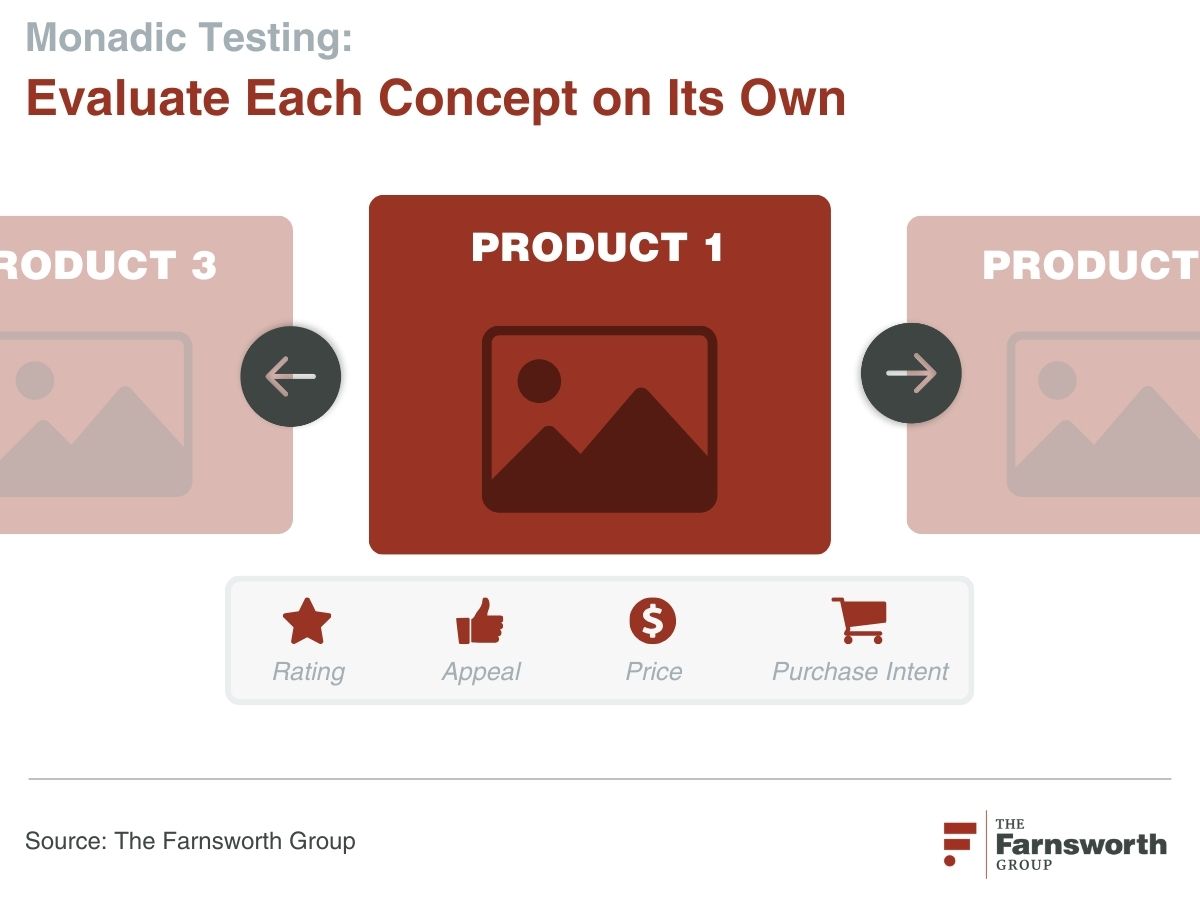
In this testing method, each concept is presented equally in a rotation with all other concepts. Testing a product concept in this sort of isolated state enables you to get a clean read from your respondents, without their opinion being colored by comparisons to other products or the order in which the concepts are presented.
A popular spin on monadic testing is sequential monadic testing, which involves presenting a single concept, followed by several additional concepts. However, they are still being considered one at a time. Survey respondents see each item on its own, but it becomes part of a larger sequence, wherein individuals are expected to identify minute differences and preferences between two or more product concepts.

How are Monadic Testing Surveys Structured?
For monadic testing, you will develop a survey to glean information from respondents about their feature preferences, perceived benefits and purchase intent.
If you’re testing multiple building products in a sequential manner, here are the types of questions to include in your survey:
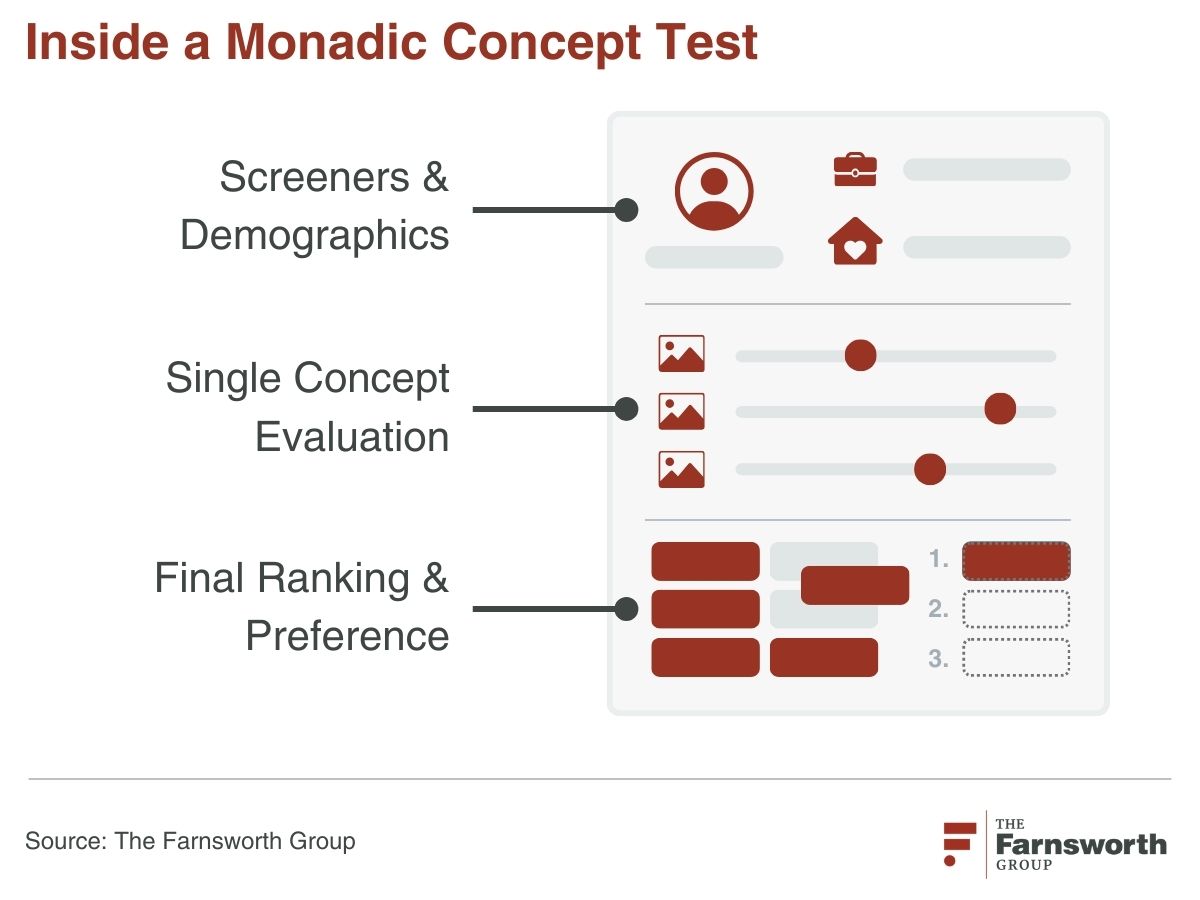
1. Screeners/Demographics
For most types of market research, you begin by collecting demographic information from your respondents, such as their profession, age and household income. You can utilize this information to ensure you are developing a new product or enhancing an existing product so it appeals to your target audience. This is also a critical stage to ensure you’re extracting only high-quality respondents from the pool of options and capturing the full spectrum of customers or industry professionals that you want to reach. Data quality, particularly from online respondents, has become a massive issue in market research. The Farnsworth Group invests heavily in survey design, technology, and over 350 years of collective industry expertise to ensure legit respondents are captured. You get out what you put in, so this phase is critical.
2. Presentation of Concepts
For the next phase of a product testing survey, you will present your concept—or concepts—to your respondents. They will evaluate the product concept and rate how well they like the concept, how much it appeals to them, how much it fits their needs, their favorite attributes, how likely they would be to purchase the product, and, in some cases, at what price point.
You also want to give respondents the opportunity to identify and express their specific likes and dislikes about an individual concept. Doing so will provide data for your company on the key benefits of different product concepts, unknown variables, and potential improvements you could make to the concept itself, as well as directional feedback on packaging and marketing.
The standard structure for a monadic testing survey includes:
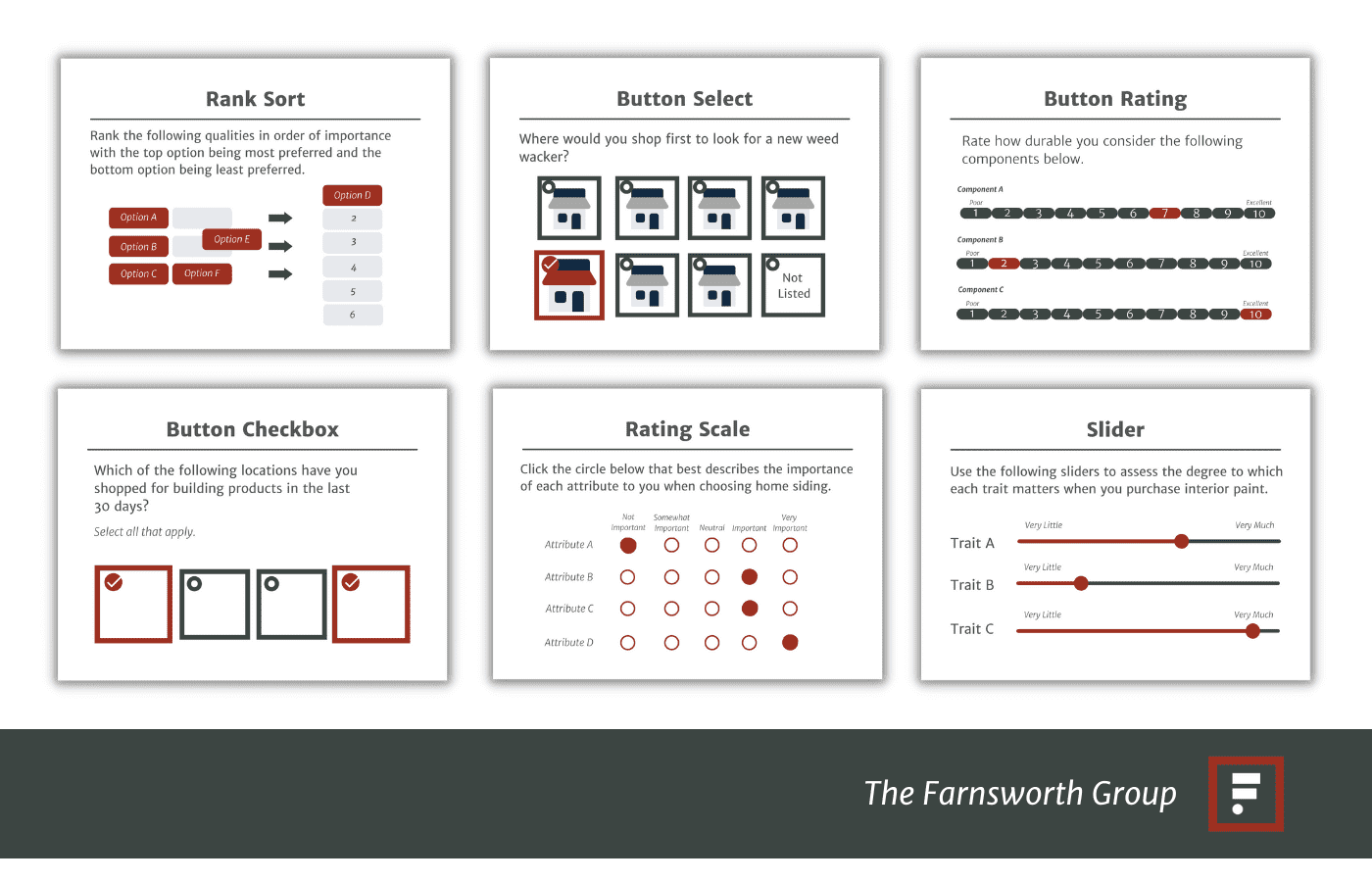
- A variety of single choice, multiple choice, rating, ranking and open-ended questions.
- Limited open-ended questions requiring each respondent to provide a numeric, single or multi-word answer to questions such as, “What do you like about this concept?” or “What would you change about this product?”
Respondents will rate and rank the importance of various concept features and their associated benefits to the user. Questions presented may look similar to the following:
3. Ranking Product Concepts
If you’re testing a product concept against alternatives, you do so one at a time in a sequence, varying which item is presented first among your respondents to prevent order bias. You also can set up your survey to randomize the questions themselves to help reduce respondent bias that results from survey fatigue, or the natural tendency to be more attentive and engaged early on in a survey and decreasingly so as it progresses.
Once all the product concepts have been shown in the survey, respondents will rank which one they most prefer and least prefer and then provide additional feedback on their most preferred option. These rankings and results can then be used to inform further conjoint analysis research, product development, and your overall go-to-market strategy.
What are the Advantages of Monadic Testing?
Monadic testing is one of the more advantageous concept testing methods, both from a respondent point of view and in terms of value for your home improvement brand. By presenting each product concept, one at a time, for evaluation, it stimulates a real-world scenario that enables respondents to focus entirely on a single concept, unlike with comparison testing or other testing methods. In this way, they are providing a genuine first impression on the product in isolation, instead of their perception being colored by comparisons.
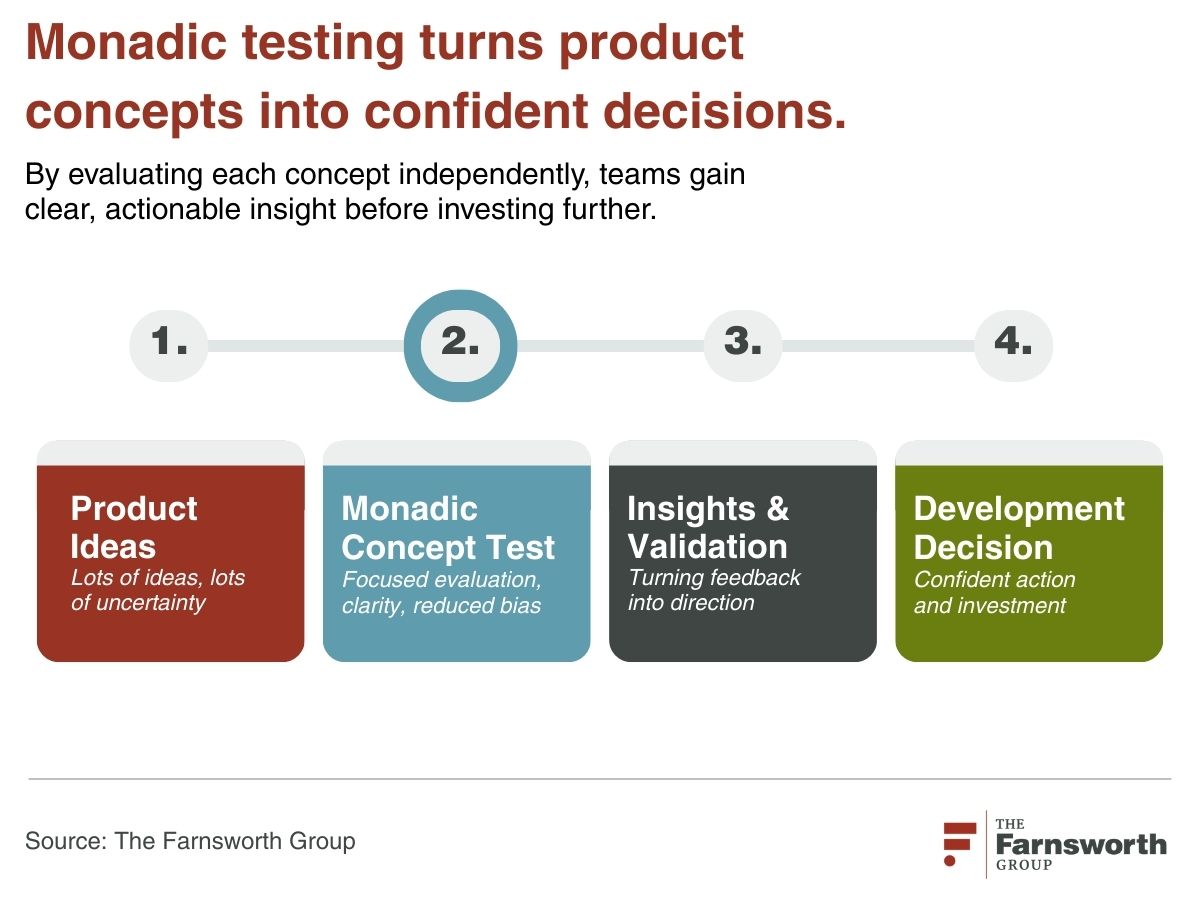
You are able to collect highly detailed and specific feedback through your survey without overwhelming or fatiguing your respondents. As a result, this form of concept testing delivers more accurate, specific and actionable data to inform decisions about product features and pricing during the next phases of development.
Some situations where you may find monadic testing to be limiting is if you need a larger sample size, to capture preference rankings, or want to distill deeper insights into pricing and competitive analysis. Fortunately, there are several other types of custom market research methods you can use to fulfill these and other objectives and get the data you need to make informed decisions at each stage of the process.
Testing Ideas During Product Development
There is always a bit of uncertainty when creating a new home improvement product or making modifications to one of your existing products. However, conducting thorough market research and testing out your product concept can help mitigate that uncertainty and help your brand effectively strategize about product attributes, addressing consumer challenges, and pricing and marketing messaging. At The Farnsworth Group, our team of experts utilizes different qualitative and quantitative methods to assist with informing each stage of product development—from product ideation and concept validation to price elasticity and messaging.
We apply proven techniques that result in clear recommendations for the most successful concept in the marketplace. You will know which concept stands out, why and what modifications will further increase adoption rates.

