

As homes and other residences get smaller and more compact, individuals are on the hunt for products—from storage and closet units to bins and baskets—to help them optimize and organize their residential space to the best of their ability.
Rising costs per square foot of homes, size-able interest rates, and changing lifestyles are all contributing to an overwhelming trend toward tighter residential spaces, with more nooks that utilize every square foot available. Organization products are also a must-have, to ensure a comfortable and convenient living situation, regardless of size, and home improvement products brands can capitalize on this demand in the coming years.
Is the Market for Home Organization Products Growing?
Demand for home organization products is on the rise. According to data from Business Research Insights, the market for home organization products is valued at approximately $13.99 billion in 2026. It is projected to have a compound annual growth rate (CAGR) of 5.4% and expand to $22.45 billion by 2035.
Looking ahead, organization and storage brands have an opportunity to provide custom solutions, products and features that are designed to meet the growing demand.
What Factors are Driving the Demand for Home Organization Products?
One of the factors lending itself to the demand for home organization products is the current landscape in the housing market across the U.S. Since 2015, the share of new homes over 2,400 square feet has declined meaningfully, while the share of homes under that threshold has increased. Karen Barnes, senior advisor at The Farnsworth Group, explains that this is not a temporary correction in the market; it is a normalization after the "McMansion era."
The decline can be traced back to several factors impacting new home affordability: rising construction costs, higher mortgage rates, and shifting buyer preferences. Regardless, homeowners and builders are both dialing in on what’s most important. And that’s where home organization products come in—and why there may be continued growth in this category.
What are the Latest Trends in Home Organization Product Demand?
At the top of the list are modular DIY, custom-designed and installed storage units. Other products that will be in high demand include shelving, bins, baskets, accessories and hardware. These types of home organization products can assist homeowners and renters in making the most of all the space available to them, including closets, garages, pantries, entryways, and outdoor areas. They also can increase versatility, making areas suitable for a wider variety of uses.
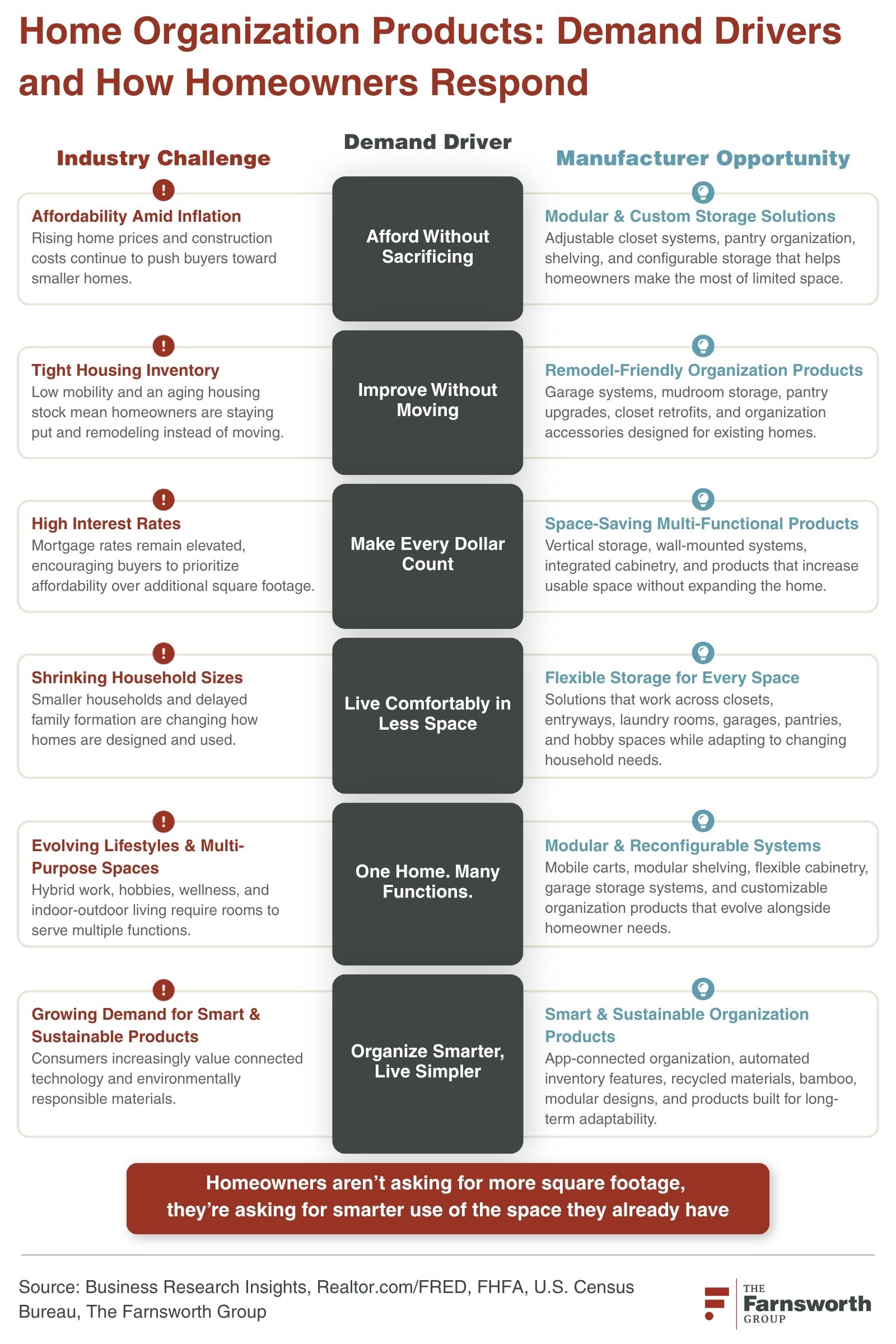
Here is a closer look at a few different factors related to the housing industry and the economy that are contributing toward the trend for smaller spaces in the U.S. and the demand for more effective organization, including:
1. Affordability Amid Inflation
One factor influencing the smaller-house trend is affordability, which is highly prioritized by first-time homebuyers. In general, home prices are on the rise. Data from the Federal Housing Finance Agency (FHFA) House Price Index shows that U.S. house prices rose 2% from April 2025 to April 2026, with the highest increases in the New England and the East North Central Division. Affordability improved modestly through mid to late 2025 as rates eased and incomes rose, but conditions remain weak by historical standards and continue to limit the pool of qualified buyers, according to our Construction and Remodeling: Drivers and Forecast Report. As individuals and families struggle to get into the housing market, investing in a smaller home is one way they have the opportunity to qualify for a home amidst higher home values.

2. U.S. Housing Inventory Remains Tight
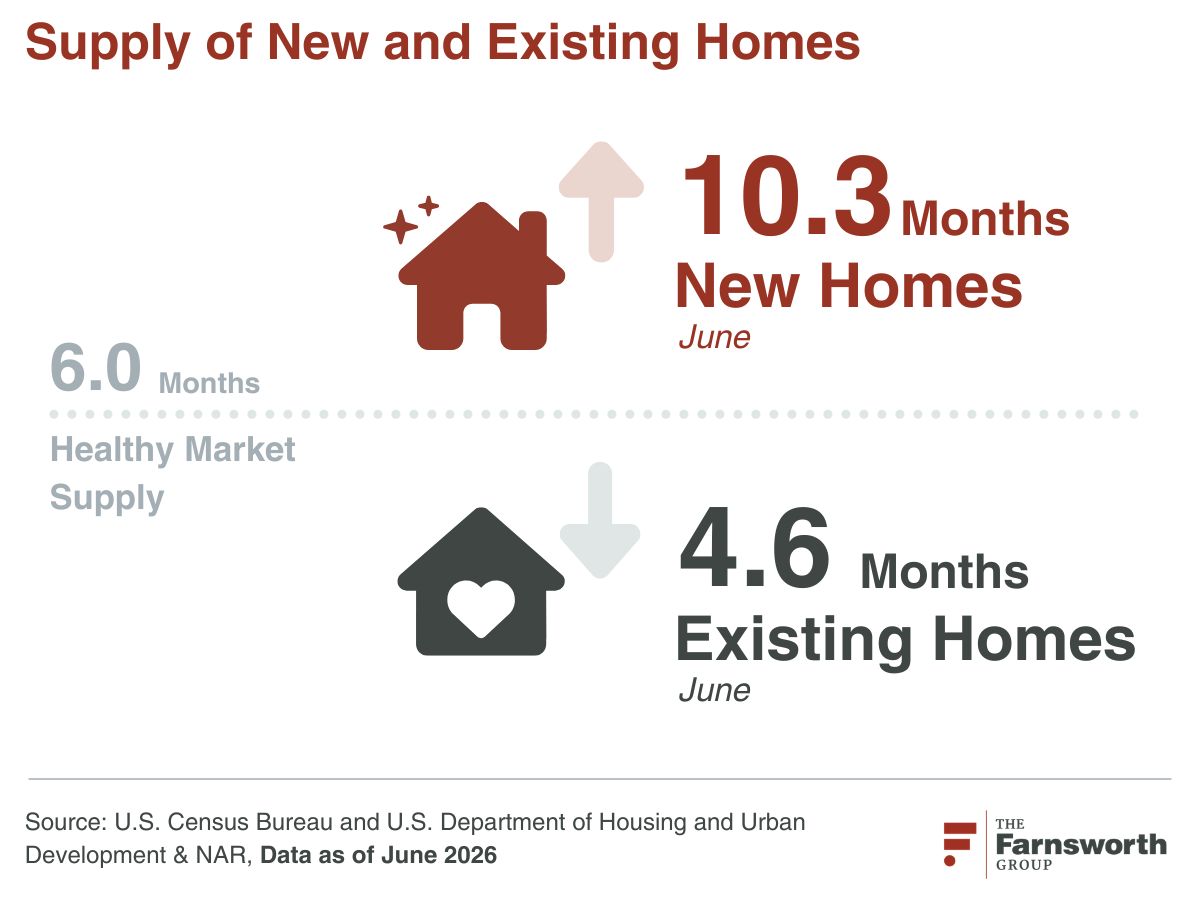
Although improving, existing home supply remains low. Higher new home inventory creates more aggressive tactics to move inventory and may cause builders to defer new starts, based on data from our report. For a healthy market, a six months' supply should be on hand. This is a balance between buyer and seller markets. In June 2026, there were 10.3 months’ supply of new homes and a 4.6 months’ supply of existing homes on the market. Household mobility also fell to a record low in 2024, the most recent year for which data is available from the U.S. Census Bureau. Lastly, the median age of owner-occupied homes is now 44 years, which is due to underbuilding of new homes and older homes remaining in inventory. As homeowners stay longer in their houses, and the housing stock ages, remodeling and reorganizing is one way to ensure the space evolves alongside their lifestyle needs. Our research shows that home improvement activity rose has declined the first two quarters of this year. However, homeowners still desire to conduct projects. A majority of planned projects are for interior spaces, where home organization products come in handy.
3. High Interest Rates Affect Consumers
Additionally, the market demand for smaller homes is due in part to interest rates—which impact both builders and buyers. The average 30-year fixed mortgage rate in the U.S. is still above 6% as of July 2026. In general, rates spiked dramatically, to a 20-year high, in 2022 and 2023. While there’s been a little relief now since last year's Federal Reserve rate cut, it’s still slow going. With no relief in sight at the moment, these lingering high mortgage rates will impact the housing market. Homebuyers will continue to be conservative and cautious, likely extending the trend for smaller homes as home builders adapt to their needs and construct new homes accordingly.
4. Household Sizes Gradually Shrinking
Additionally, we’ve seen notable changes in household size over the past several years. According to data from the U.S. Census Bureau, the average number of people per household dropped dramatically in the 1970s and 1980s and continues on a steady downward trend. In 2025, the average was about 2.5 for all households and hovering around 3.15 for family households. Plus, individuals are choosing to have kids later in life, which means first-time homebuyers typically don’t require the same amount of space. Families are able to live comfortably with a smaller home compared to years past. It's also possible that families will start to stay in smaller homes for longer than historically seen.
5. Evolving Lifestyles and Spaces
Finally, there have been lifestyle changes over the past few years that influence how people view and use their residential space. The response to covid highlighted the importance of indoor-outdoor living, with many people investing in their yards, gardens, and other outdoor spaces during that time period. Also, while remote work isn’t as prevalent as it was during the height of the pandemic, there is a lingering change in the professional landscape across multiple industries. Many people have adjusted to a hybrid situation, working partially in the office and partially at home. With residential spaces expected to serve a wide variety of purposes, individuals are seeking home improvement products and features to help them keep their home or apartment organized and functioning smoothly—despite the decrease in square footage. That includes modular organization units, drop-leaf tables, kitchen islands that include drawers and cupboards, vertical closet organizers, mobile storage carts, basket-style shelving, and frameless cabinets, to name a few.
Lifestyles are also spreading to newer spaces for storage and organization. Garage storage systems have been on the rise for several years along with intentional spaces dedicated to hobbies or entertainment. With many homeowners choosing to remain in and invest in their home, look for these growing applications to be an opportunity with larger home improvement projects expected over the next few years.
6. Demand Growing for Smart and Eco-Friendly Products
Technological innovations and the demand for sustainable, eco-friendly materials is also influencing demand for home organization products. This includes things like smart closet technologies, app-controlled decluttering devices, automated inventory management, and other products that can be integrated into broader smart home systems. Combined with modular storage system designs, tech-savvy solutions are aimed at helping homeowners optimize their space and make it more comfortable and less stressful. Additionally, smart closet technologies can track what items or clothing are being utilized, motivating household members to consider donating or getting rid of what they don’t use. In terms of eco-friendly materials, such as recycled plastics and bamboo. Manufacturers and suppliers can tap into these growing trends by developing and marketing versatile products that meet consumers' preferences for convenience, connection, and stress-free living.
Meeting Demand for Home Organization Products
As a home improvement product manufacturer or retailer, it is important that you understand the underlying causes and factors contributing to demand for specific product categories, so you can plan, strategize, and market accordingly. That's where we can help. The Farnsworth Group provides specialized Customer Usage, Attitude and Behavior market research services to help you dig deeper into your target audience and determine what products to develop and promote, which distribution channels to release them through, and how to market them.

Frequently Asked Questions
Is the market for home organization products growing?
Demand for home organization products is on the rise, and the market is growing in the United States. The market for home organization products is valued at approximately $13.99 billion in 2026. It is projected to have a compound annual growth rate (CAGR) of 5.4% and expand to$22.45 billion by 2035. Some of the factors driving this growth include the current housing landscape in the U.S., shifting home buyer preferences, and decreasing home sizes.
What factors are driving the demand for home organization products?
One of the factors driving demand for home organization products is the current landscape in the housing market across the U.S. Since 2015, the share of new homes over 2,400 square feet has declined meaningfully, while the share of homes under that threshold has increased, according to analysis from The Farnsworth Group. Larger homes with four or more bedrooms, three or more bathrooms, and expansive square footage are losing share, and smaller homes are gaining it. This decline can be traced to several trends, including high inflation, lack of affordability, evolving buyer preferences, and changing lifestyles and household formations.
What are the latest trends in home organization product demand?
The latest trends in home organization product demand include a desire for modular DIY, custom-designed and installed storage units. Other products that are in high demand include shelving, bins, baskets, accessories and hardware. These types of home organization products can assist homeowners and renters in making the most of all the space available to them, including closets, garages, pantries, entryways, and outdoor areas. They also can increase versatility, making areas suitable for a wider variety of uses.
