

"Uncertainty" has become a defining characteristic of today's outdoor living, lawn and garden, and home improvement markets. It is being driven by several persistent economic and industry forces that continue to influence homeowner spending, contractor operations, and supplier strategies.
Affordability Challenges and Homeowner Financial Strain
One of the most significant factors affecting the market today is disposable income. As homeowners continue to face inflationary pressures that increase the cost of everything from fuel to everyday necessities, discretionary spending remains under pressure. This is especially true among households outside the highest income brackets.
Many outdoor living, lawn and garden, and home improvement projects are discretionary in nature. As household budgets tighten, these projects are often among the first expenditures homeowners choose to delay or even cancel.
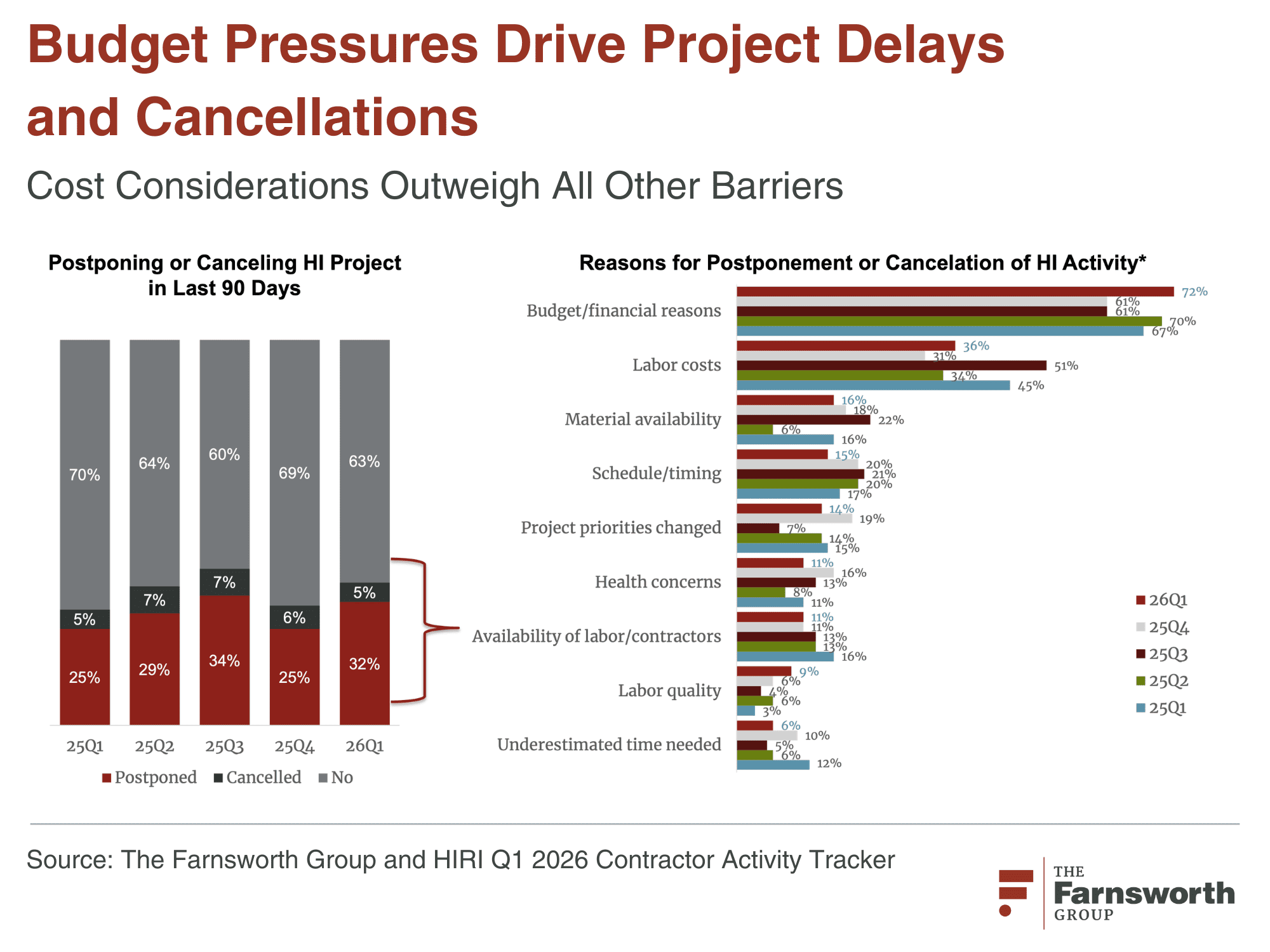
The Farnsworth Group's Quarterly Homeowner Project Tracker research shows that in Q1 2026, 37% of homeowners who had started a project ultimately postponed or cancelled it, with financial concerns and labor costs cited as the primary reasons. At the same time, nearly three out of four homeowners report having at least one project they would like to complete but have not yet begun.
These findings highlight a growing gap between homeowner aspirations and homeowner action. Demand has not disappeared. Instead, it is increasingly constrained by affordability concerns and financial uncertainty. Our research also shows 74% of Homeowners have at least one project they’d like to do, but have not started for one reason or another.
Landscape Labor Supply Continues to Tighten
Labor availability remains another persistent challenge and one that may become even more significant in the years ahead.
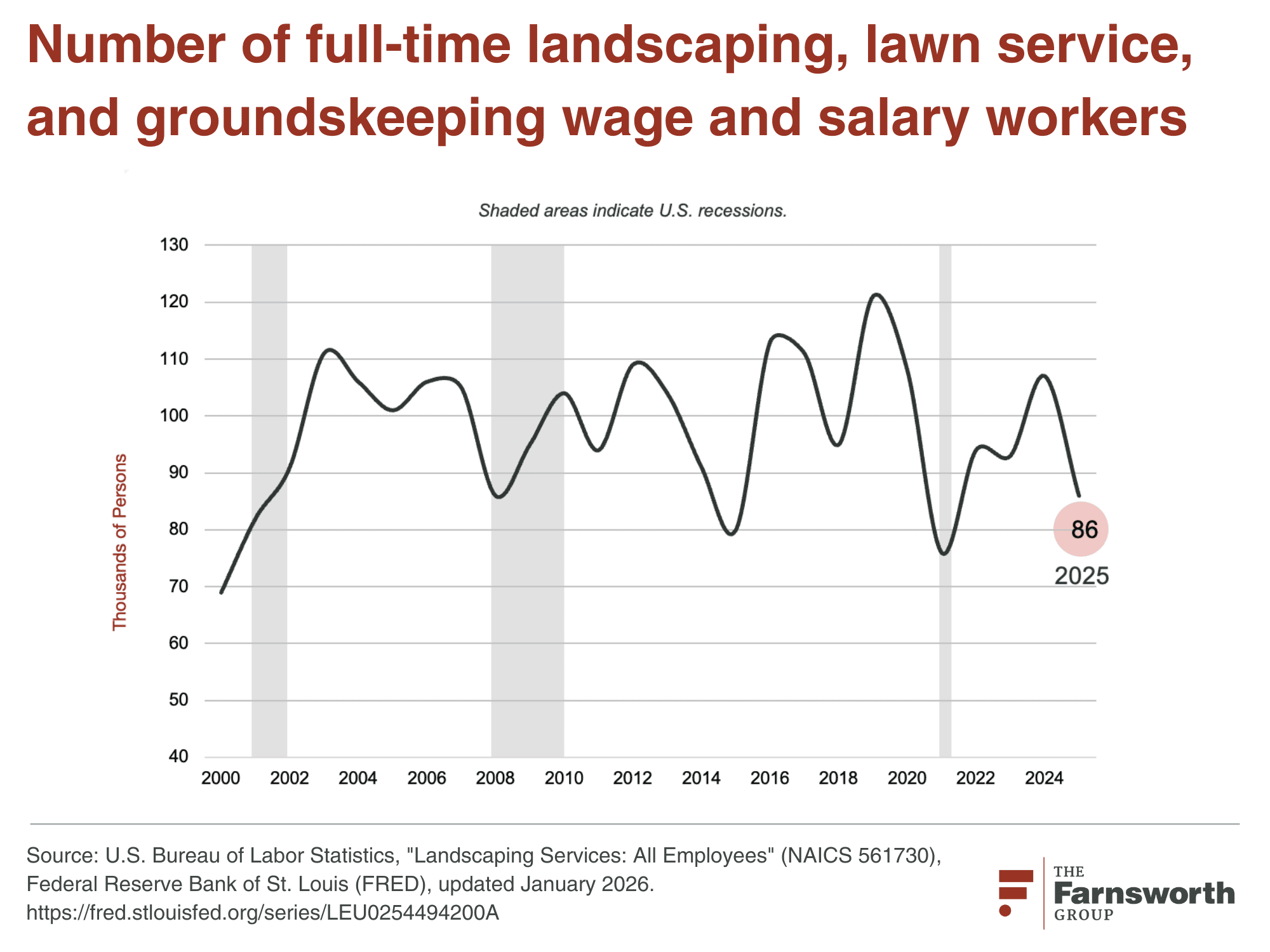
Taylor Pence, Senior Advisor for the Outdoor Power Equipment category at The Farnsworth Group, recently reported that full-time wage and salary employment in landscaping, lawn service, and groundskeeping has fallen to approximately 86,000 workers nationally as of early 2025, down nearly 30% from the sector's peak of roughly 121,000 workers in 2020.
At the same time, the number of landscaping service establishments remains strong. Florida, California, and New York alone account for more than 29,000 landscaping businesses competing for available labor. Meanwhile, the residential market continues to segment, with entry-level properties trending smaller while custom and mid-sized properties trend larger. This evolution is forcing operators to make increasingly deliberate decisions about the customers they serve and the services they provide.
The result is a structural squeeze. Labor availability remains constrained, competition for qualified workers continues to intensify, and customer demand is becoming increasingly segmented. Together, these factors are challenging operators to improve productivity, refine their business models, and invest strategically.
Additional uncertainty stems from workforce availability. The landscaping and groundskeeping workforce has historically relied heavily on foreign-born workers. Tightening H-2B visa limitations, increased enforcement activity, and ongoing policy discussions have added further uncertainty to an industry already struggling to meet labor demand.
Availability and Price Pressures Are Driving Behavioral Change
One of the more lasting shifts to emerge from the pandemic has been a greater willingness among contractors and homeowners to explore new brands and suppliers.
Initially, this behavior was driven primarily by product availability challenges. Today, pricing concerns have become an equally important factor as contractors and homeowners seek alternatives that better align with budget realities.
The Farnsworth Group's 2026 Building Products Customer research found that 48% of contractors tried a new supplier during the past 12 months. Among those who switched, 45% cited product availability as the reason, while 40% pointed to pricing considerations. More importantly, 56% continued using both their previous supplier and the newly adopted supplier moving forward.
We see similar patterns when evaluating brand behavior. Forty-four percent of residential trades professionals reported trying a new brand during the past year. Of those who made the switch, 84% reported being satisfied with the new brand.
These findings highlight two meaningful shifts in contractor behavior. First, professionals have become increasingly open to evaluating alternative solutions. Second, traditional brand and supplier loyalty has softened as performance, availability, and value take on greater importance in purchasing decisions.
In fact, only 36% of residential trades professionals describe themselves as "very loyal" to brands, leaving nearly two-thirds who identify as only somewhat loyal or not loyal at all.
For manufacturers and suppliers, this creates both risk and opportunity. Longstanding relationships can no longer be taken for granted, but organizations that deliver superior value and customer experiences have more opportunities than ever to gain share.

Solutions in an Uncertain Market
While many of these challenges originate from broader economic and demographic trends, there are meaningful opportunities for manufacturers, suppliers, and contractors to create value.
For outdoor power equipment manufacturers, innovation that improves productivity can help offset labor constraints. Equipment capable of running longer, completing tasks more efficiently, and minimizing downtime enables contractors to accomplish more with limited labor resources.
Suppliers also play a critical role. Solutions that streamline ordering, inventory management, delivery, equipment service, and repair processes can significantly improve operational efficiency for landscape professionals.
There is also a substantial opportunity to help homeowners move forward with confidence. Offering solutions across a range of budget levels and helping customers understand tradeoffs can reduce hesitation and improve project conversion rates.
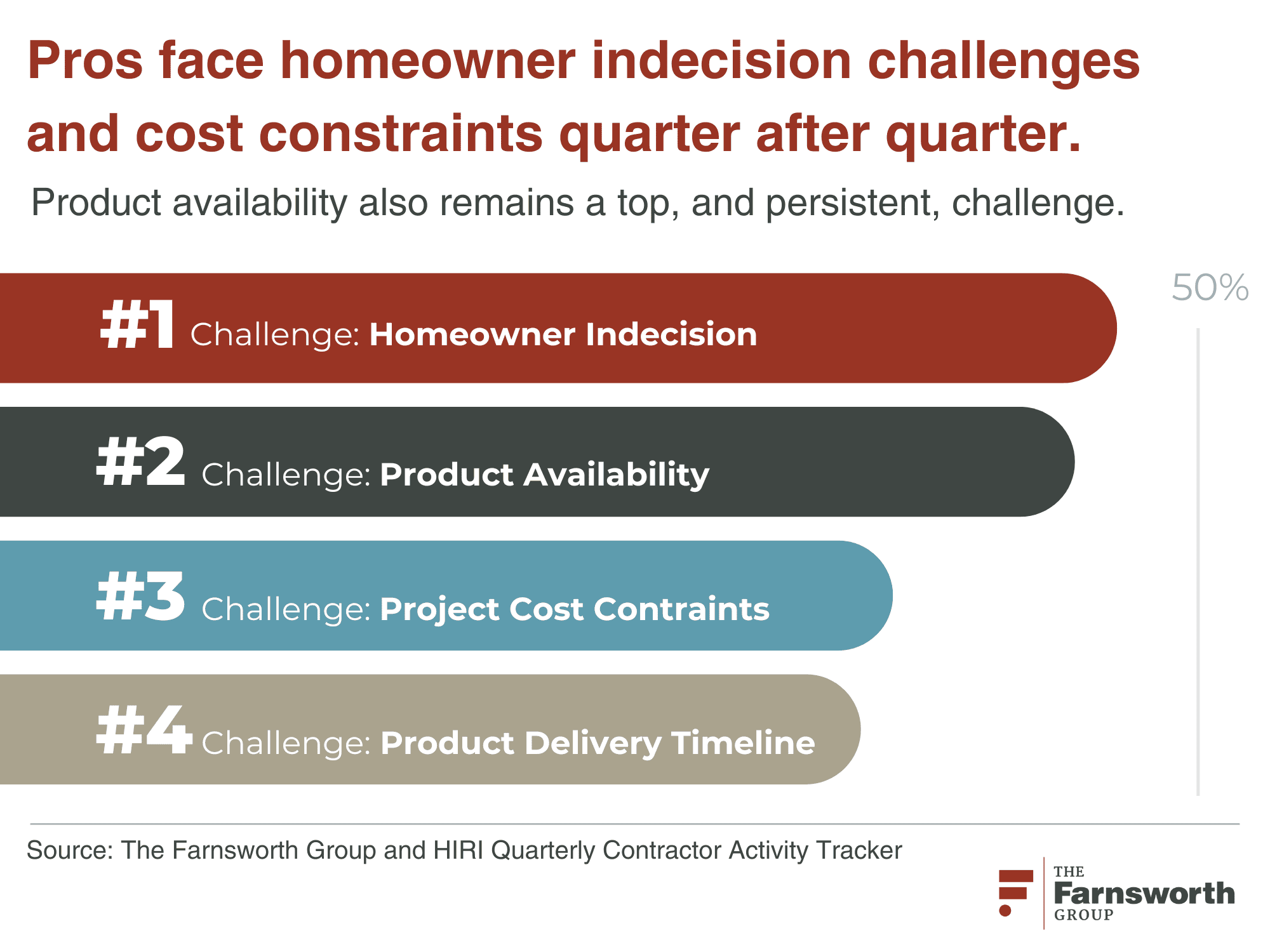
Homeowner indecision continues to be one of the most common frustrations reported by contractors. Much of that indecision stems from uncertainty about spending in today's economic environment.
What Building Products Manufacturers Should be Focused On Right Now
In today's market, successful manufacturers, suppliers, and contractors are increasingly acting as trusted advisors rather than transactional sellers. Customers are looking for guidance, reassurance, and confidence as much as they are looking for products and services.
Manufacturers and suppliers must also continue investing in both technology and service. Digital capabilities that allow customers to order products online, schedule deliveries, and track progress have become increasingly important. However, technology alone is not enough.
When deliveries are delayed, lead times extend, or products arrive damaged, customers want access to knowledgeable people who can provide solutions. Organizations that consistently solve problems and deliver reliable experiences are earning stronger customer loyalty.
In a market where overall growth remains limited, competitive advantage is increasingly determined not only by the customers you win, but by the customers you retain.
While uncertainty remains a defining feature of today's market, uncertainty does not eliminate opportunity. Organizations that understand evolving customer needs, invest in operational efficiency, and position themselves as trusted partners will be best positioned to gain share and strengthen loyalty. In periods of disruption, market leaders are often distinguished not by their ability to avoid challenges, but by how effectively they respond to them.
About The Farnsworth Group
With nearly 40 years of custom market research expertise, The Farnsworth Group provides extensive insights and recommendations across the Outdoor Power Equipment, Lawn & Ranch, and Building Products industries. Our research solutions span across market sizing, customer segmentation, product development research, customer experience measurement, brand health tracking, and insights for strategic growth initiatives.
We help organizations understand customer challenges, purchasing behaviors, channel dynamics, and market opportunities so they can make more confident business decisions.
Our team takes the time to understand each client's unique objectives, leveraging decades of industry knowledge and customized research solutions to guide strategy and identify opportunities for growth.

%20(1).png)
Written By Grant Farnsworth
President and Senior Consultant
Grant has hands-on experience across every stage of market research and has been part of The Farnsworth Group since his teenage years, developing a deep expertise in research design and data integrity. With over 20 years in the home improvement, lawn & ranch, and building products industries, he is passionate about helping clients succeed through meaningful insights. Based in Denver, Grant is a music enthusiast who values fun, family, and the impact of his work in everyday life.